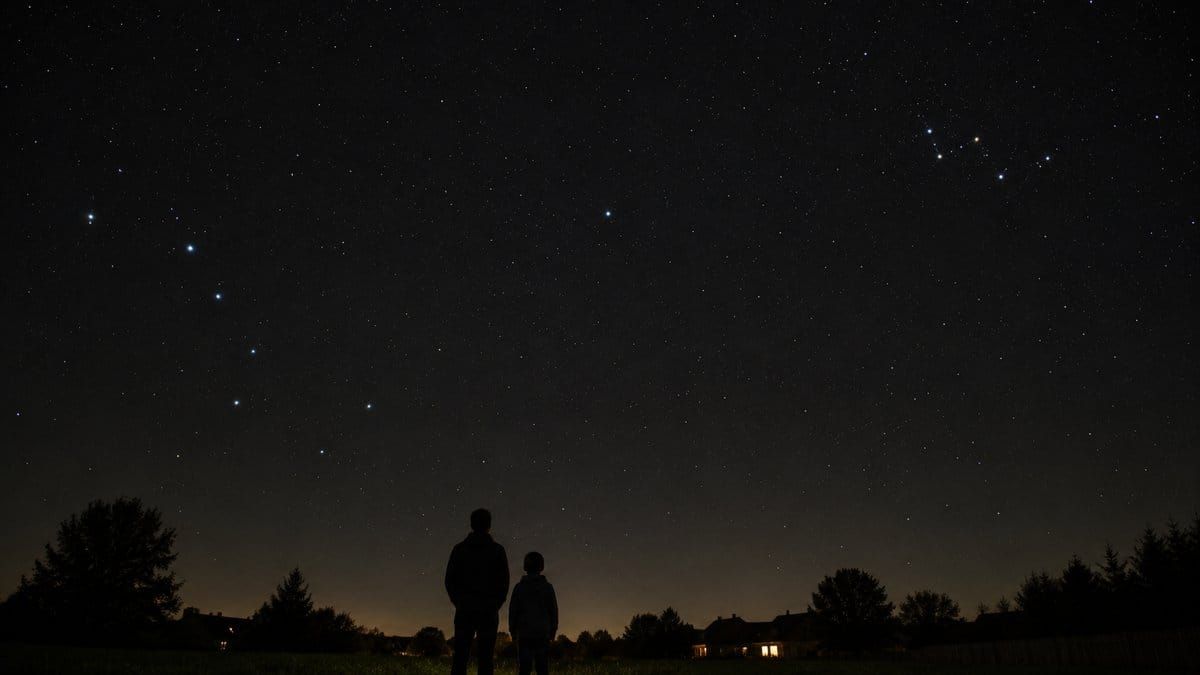
Quick answer: Constellations are pictures made of stars — a hunter, a lion, a giant spoon — that people have connected with imaginary lines for thousands of years. The easiest ones for kids to find are the Big Dipper, Orion (with its three belt stars), and Cassiopeia (shaped like a W). Start with those, learn to hop from the Big Dipper to the North Star, and you'll be reading the night sky in no time.
Learning constellations for kids is one of the best ways to turn a plain night sky into a treasure map. A constellation is just a group of stars that people long ago connected into a picture — an animal, a hero, or an everyday object. Once you know a few, you can find them again and again, all year long, no telescope needed. This guide is written for kids, parents, and teachers — simple enough to read together, and packed with easy patterns you can spot from your own backyard tonight. When you're ready for the grown-up version, our complete guide to all 88 constellations has every last one.
What is a constellation?
A constellation is a picture made of stars. If you play connect-the-dots, you already know how it works: people looked up at the brightest stars, connected them with imaginary lines, and saw shapes — a bear, a scorpion, a king and queen. Then they made up stories about them, which is how the constellations got their names.
Here's a fun secret: the stars in a constellation aren't really close together at all. Some are near and some are super far away — they only look like a group because we see them from one spot, planet Earth. A constellation is really a direction to look, not a place. And there are exactly 88 constellations that cover the whole sky, so no matter where you look, you're always looking at one.
One more thing worth knowing: some famous shapes aren't official constellations — they're called asterisms. The Big Dipper is the most famous asterism of all. It's part of a bigger constellation called Ursa Major, the Great Bear. Don't worry about that word too much — just know the Big Dipper is your best friend when you're starting out.
For a fun watch-along companion, this SciShow Kids video shows young stargazers how to spot their first constellations:
Where did constellations come from?
People all over the world have been drawing pictures in the stars for thousands of years — long before there were books, phones, or even writing. Farmers used them as a calendar to know when to plant their crops, and sailors used them as a map to find their way across the ocean at night.
Here's the really cool part: different cultures looked at the same stars and saw different pictures. The stars we call the Big Dipper have been seen as a bear, a wagon, a plough, and even a giant question mark by different people around the world. The names we use today mostly come from the ancient Greeks and Romans, which is why so many constellations are heroes and creatures from their myths. So when you make up your own star picture, you're doing exactly what people have always done.
The easiest constellations for kids to find
You don't need to learn all 88 — that would take years! Start with a handful of bright, easy shapes. Here are eight of the best constellations for kids to spot, what each one looks like, and a cool fact to remember it by.
| Constellation | What it looks like | When to look | Cool fact for kids |
|---|---|---|---|
| The Big Dipper | A giant spoon or saucepan | All year (northern sky) | It points to the North Star, which never moves. |
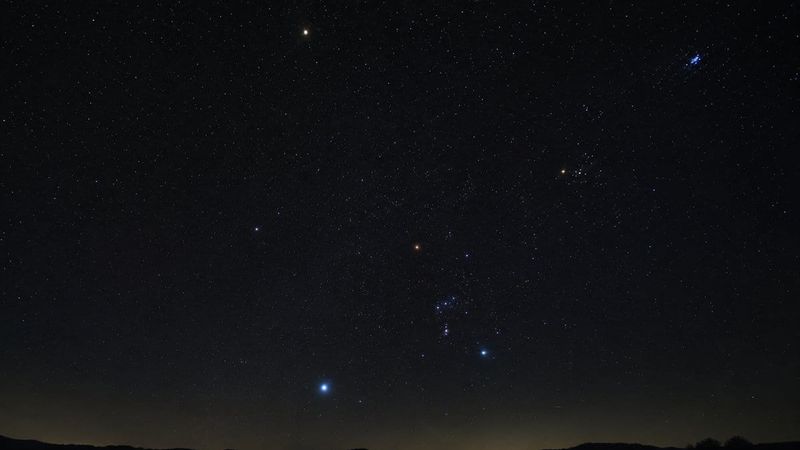
| Orion | An hourglass with a 3-star belt | Winter evenings | You can see it from anywhere on Earth. |
| Cassiopeia | A big letter W (or M) | All year (northern sky) | It’s a queen sitting on her throne. |
| Leo | A backwards question mark | Spring evenings | It really does look like a crouching lion. |
| Taurus | A V-shaped face with the Pleiades beside it | Winter evenings | The Pleiades is a sparkly cluster of baby stars. |
| Cygnus | A cross flying down the Milky Way | Summer evenings | People call it the Northern Cross. |
| Scorpius | A curling scorpion with a stinger | Summer evenings | Its heart is a huge red star called Antares. |
| The Southern Cross | A small, bright cross | All year (southern sky) | It helps people down south find which way is south. |
Try to find just one new constellation each time you go outside. Once you've got it, it becomes an old friend you'll recognize forever.
The stories behind the constellations
The best way to remember a constellation is to know its story. People made these up thousands of years ago, and they still help the shapes stick in your mind:
- Orion the Hunter was a mighty hunter with a glittering belt and a sword hanging from it. A scorpion was sent to sting him — so the gods put Orion and Scorpius on opposite sides of the sky, and they never appear at the same time.
- Ursa Major, the Great Bear carries the Big Dipper on its back and tail. One old story says a mother and her son were turned into bears and lifted into the sky to keep them safe forever.
- Cassiopeia the Queen once bragged that she was the most beautiful person alive. As a lesson about being boastful, she was placed on her throne circling the North Star — sometimes hanging upside down!
- Leo the Lion is a proud lion mid-pounce. The curl of stars that makes his mane and head looks just like a backwards question mark.
- Cygnus the Swan flies along the glowing band of the Milky Way with its long neck stretched out and its wings spread wide.
- Scorpius the Scorpion has a curved tail with a stinger, and a bright red heart-star named Antares — a name that means "rival of Mars," because it glows red like the planet Mars.
Try making up your own stories too. There's no wrong answer — the very first stargazers did exactly the same thing.
Which constellations can you see in each season?
The sky slowly changes as the year goes by, so different constellations visit in different seasons. Here's a quick guide for the northern half of the world (down south, swap the seasons around):
- Winter: Orion, Taurus with the Pleiades, and Gemini the twins — the brightest, sparkliest season of all.
- Spring: Leo the lion climbs high, and the Big Dipper is right overhead — the easiest time to find it.
- Summer: Cygnus the swan, and low in the south, Scorpius and Sagittarius, with the misty Milky Way behind them.
- Autumn: Pegasus the flying horse and Cassiopeia's bright W ride high in the evening sky.
The Big Dipper, Cassiopeia, and the North Star are special — from most of the northern world they never set, so you can find them on any clear night, in every season.
How to find the North Star with the Big Dipper
This is the first star trick every stargazer learns, and it's easy. The Big Dipper is shaped like a big spoon or a saucepan. Look at the two stars at the front edge of the "bowl" — these are called the Pointer Stars. Draw an imaginary line straight up from them, and it lands on Polaris, the North Star.
Why does the North Star matter? Because it always stays in the same spot, right above the North Pole, while all the other stars slowly wheel around it through the night. If you can find Polaris, you always know which way is north — the same trick sailors and explorers used for hundreds of years before maps and phones. Polaris is also the tip of the handle of the Little Dipper, a smaller, fainter spoon. And on the other side of the North Star, you'll spot the W-shape of Cassiopeia. Three constellations found from one star-hop!
Fun constellation facts for kids
Constellations are full of surprises. Here are some favorites to share:
- There are 88 constellations in total, and together they cover every part of the sky — like puzzle pieces with no gaps.
- The biggest constellation is Hydra the water snake. It's so long it takes hours to rise all the way up.
- The smallest is Crux, the Southern Cross — but it's so famous it appears on the flags of five countries.
- Orion can be seen from every single country on Earth, so it's a friend to kids everywhere.
- The three stars in Orion's Belt point to Sirius, the brightest star in the whole night sky.
- The stars in Taurus include the Pleiades, a sparkly group that looks like a tiny dipper — some people call it the Seven Sisters.
- Constellations slowly change with the seasons, so winter's stars are different from summer's. That's why Orion visits in winter and Scorpius in summer.
Stargazing tips for families
You don't need any special gear to start — just your eyes and a clear night. A few simple tricks make it much more fun:
- Get away from bright lights. Streetlights hide the fainter stars. A park, a backyard, or a trip to the countryside makes way more stars appear. (Here's why bright city lights wash out the stars.)
- Let your eyes adjust. Wait about 15–20 minutes in the dark and your eyes get much better at seeing faint stars. Avoid looking at bright phone screens — or cover yours with red tape.
- Bring a blanket. Lie back so you can see the whole sky without craning your neck. Warm clothes help, even in summer.
- Use a star map or free app. Point a stargazing app at the sky and it shows you the names of everything. Great for double-checking what you've found.
- Start with one shape. Learn the Big Dipper or Orion first, then use it to hop to the next constellation. One a night is plenty.
Most of all, take your time and make up your own stories about the shapes you see. That's exactly how the very first stargazers, thousands of years ago, learned the sky — and it still works today.
Constellations for kids FAQ
What is the easiest constellation for a kid to find?
The Big Dipper in the northern sky and Orion in winter are the two easiest. The Big Dipper looks like a giant spoon and is up almost every night, while Orion has three bright stars in a straight row (its belt) that are impossible to miss.
How many constellations are there?
There are 88 official constellations, and together they cover the entire sky. Astronomers agreed on the list about 100 years ago so that everyone around the world uses the same names.
Do you need a telescope to see constellations?
No — constellations are best seen with just your eyes. A telescope actually zooms in too close to see a whole constellation. You only need a clear, dark-ish sky and a little patience while your eyes adjust.
What's the difference between a constellation and an asterism?
A constellation is an official star picture, like Ursa Major the Great Bear. An asterism is a smaller pattern inside it, like the Big Dipper. The Big Dipper is part of Ursa Major, not a constellation on its own — but it's still the most useful shape to learn first.
Why do the constellations change through the year?
Because Earth travels around the Sun, the night side of our planet faces different stars in different seasons. That's why you see Orion in winter and Scorpius in summer — the sky slowly turns like a giant, year-long carousel.
About the author — Hamza is an astrophotographer who has been photographing the night sky since 2008. He runs a remote telescope at Deepsky Chile under some of the darkest, most star-filled skies on Earth, and shares his pictures on Instagram @stellar.nomads.