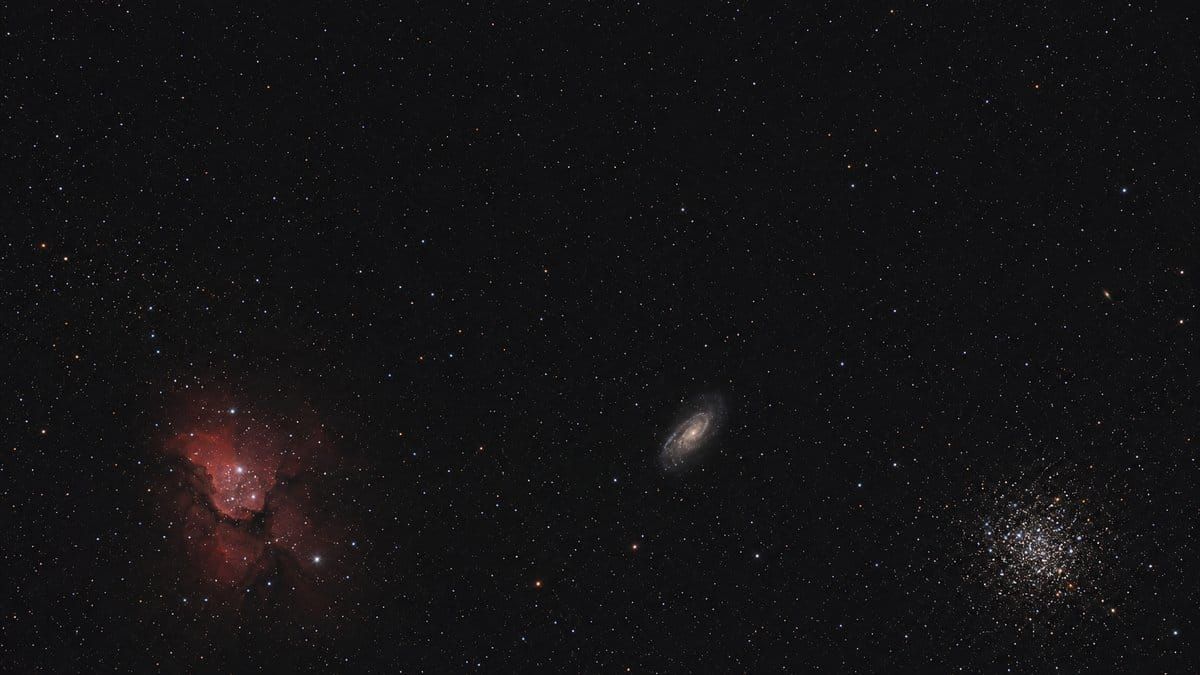
A star catalog — like any astronomical catalog — is a systematic list of celestial objects, each with a permanent designation and precise data. Two families matter: visual deep-sky catalogs (Messier, Caldwell, NGC/IC) that tell you what to observe, and astrometric star catalogs (Hipparcos, Tycho-2, Gaia, UCAC4, GSC) that your plate-solving software matches your frame against.
Every astrophotographer lives inside star catalogs whether they realize it or not. The "M" in M42, the "NGC" in NGC 7000, the reference stars your solver crunches at 2 a.m. to confirm the mount landed on target — all of them trace back to catalogs built over the last 250 years. This guide maps the whole landscape: the classic deep-sky lists most observers start with, the massive survey catalogs that power modern plate solving, and — from a decade of running a remote rig — which star catalog your software actually loads when it solves a frame.
What Is an Astronomical Catalog? (and why there are so many)
An astronomical catalog is a structured, published list of objects in the sky, each carrying a unique designation (a name-plus-number, like M31 or NGC 224), a position in celestial coordinates, and usually measured data such as brightness, size, or motion. A catalog is not the same as a designation (the label) or a database (a queryable modern collection like SIMBAD that aggregates many catalogs). The catalog is the original curated source; the designation is the handle it gives each object.
Why are there so many? Because each was built to answer a different question, with the best instrument of its era. Charles Messier wanted to avoid mistaking fuzzy blobs for comets. The astrometric surveys wanted the exact position and motion of every measurable star. A catalog reflects both a purpose and a technology, so new telescopes and new goals keep spawning new catalogs — and old ones never fully retire, because their designations are baked into a century of literature.
For a working imager, the practical split is simple. Some catalogs list the things you photograph (galaxies, nebulae, clusters). Others list the reference stars your software solves against to figure out exactly where the camera is aimed. Keep that division in mind and the whole zoo makes sense.
For a visual companion to how modern surveys turned the night sky into a measured, three-dimensional map, this ESA explainer on the Gaia mission is excellent:
The Two Families of Catalogs: Visual/Deep-Sky vs Astrometric/Survey
Nearly every catalog you will meet belongs to one of two families, and the difference explains why your gear cares about some and your eyepiece cares about others.
Visual / deep-sky catalogs list extended objects — the galaxies, nebulae, and star clusters you frame and expose. Messier, Caldwell, the New General Catalogue (NGC) and its Index Catalogue (IC) supplements, and the Herschel 400 all live here. These are your target lists.
Astrometric / survey catalogs list stars — millions or billions of them — with extreme positional precision, brightness, and proper motion (how fast a star drifts across the sky). Hipparcos, Tycho-2, the Guide Star Catalog (GSC), the USNO catalogs, UCAC4, and Gaia are the astrometric family. Your plate-solving software matches the star pattern in your image against one of these to compute the frame's exact center, rotation, and scale.
The illustration below is the mental model we keep coming back to: two roots, one for what you observe and one for what your software solves against, with a marker showing exactly where a plate solver reads.
The Messier Catalog: Where Most Observers Start
The Messier catalog is the 110-object list where nearly every deep-sky observer begins. Charles Messier compiled it in the 1770s and 1780s not as a sightseeing guide but as a nuisance list: he hunted comets, and these fuzzy, non-moving smudges kept fooling him. Cataloging them meant he could ignore them. The irony is that his "objects to avoid" became the most beloved observing list in the hobby.
The Messier objects (M1 through M110) are bright, well-placed for the northern hemisphere, and gorgeous through modest gear — the Orion Nebula (M42), the Andromeda Galaxy (M31), the Pleiades (M45). Because they are big and bright, they are the perfect first imaging targets. We cover the full list, magnitudes, and best seasons in our dedicated guide to the Messier catalog, and the Orion region — home to M42 — in our Orion constellation guide.
Many Messier objects carry a second, NGC designation too — M51 is also NGC 5194, M42 is also NGC 1976. That cross-labeling is your first hint that catalogs overlap and reference each other constantly.
The Caldwell Catalog: Filling Messier's Gaps
The Caldwell catalog is Messier's natural sequel: 109 bright deep-sky objects that Messier left out, assembled by British amateur-astronomy popularizer Sir Patrick Moore in 1995. Moore used the "C" prefix (Caldwell comes from his full surname, Caldwell-Moore, because "M" was already taken).
The Caldwell list deliberately reaches where Messier could not. Messier observed from Paris and never cataloged the far southern sky, so Caldwell includes showpieces like the Omega Centauri globular cluster (C80) and the Helix Nebula (C63). It is ordered by declination, from the north celestial pole down to the south — a practical touch for planning a night's imaging run by sky position.
Together, Messier plus Caldwell give you roughly 220 curated, camera-friendly targets spanning the entire celestial sphere. For a beginner building a first-year imaging plan, that pair is hard to beat.
NGC and IC: The New General Catalogue of Nebulae and Clusters
The New General Catalogue (NGC) is the backbone designation for deep-sky objects. Compiled by Danish-Irish astronomer John Louis Emil Dreyer and published in 1888, it lists about 7,840 objects — galaxies, nebulae, and star clusters. Its two Index Catalogue (IC) supplements, from 1895 and 1908, added roughly 5,300 more objects discovered as photography took over from the visual eyepiece.
If Messier and Caldwell are the greatest-hits albums, the NGC is the full discography. Most deep-sky objects you image that are fainter than the Messier showpieces will carry an NGC or IC number as their primary label. The Whirlpool Galaxy is M51 and NGC 5194; M106 is also NGC 4258; and the Wizard Nebula is NGC 7380 with no Messier number at all. When you plan targets in Stellarium or acquisition software, NGC/IC is the vocabulary you will use most.
The NGC is also historically important because it consolidated decades of earlier sweeps — most notably the Herschels' — into one numbered, all-sky reference that the whole field could share. Our deep dive on M51 (NGC 5194) shows how these overlapping designations play out on a single famous galaxy.
The Herschel 400: An Observing Program, Not Just a List
The Herschel 400 is a curated 400-object subset of William Herschel's discoveries, designed as an observing challenge rather than a comprehensive catalog. William Herschel — with his sister Caroline and later his son John — swept the sky systematically in the late 1700s and early 1800s, discovering roughly 2,500 deep-sky objects. Those sweeps became the raw material Dreyer later folded into the NGC.
In 1980, members of the Ancient City Astronomy Club selected 400 of the best Herschel objects visible from mid-northern latitudes as a next step for observers who had finished the Messier list. Completing it earns a certificate from the Astronomical League. For imagers, the Herschel 400 is a ready-made "what do I shoot after the Messiers" project — fainter, more varied, and a genuine test of a dark site and good tracking.
From Objects to Stars: Why Astrometric Catalogs Exist
So far every catalog has listed extended objects you point at. Now the story pivots to stars, and to precision. Astrometric catalogs exist to answer a different question: exactly where is each star, how far away, and how is it moving?
That precision is not academic. It is the foundation of modern astrophotography workflow. When your software plate-solves a frame, it detects the stars in your image and matches their pattern against a reference star catalog to compute the frame's true center coordinates, orientation, and pixel scale. Autoguiding, mosaic planning, and go-to accuracy all rest on the same star positions. If you have ever watched a solver nail your target center after a rough go-to, you were watching an astrometric catalog do its job. (For a refresher on the target types these stars help you find, our overview of what a nebula is is a useful companion.)
The astrometric family is a lineage of ever-more-precise sky surveys, each building on the last. Here is how it developed.
Hipparcos and Tycho-2: The Space-Astrometry Foundation
Hipparcos was the mission that made modern astrometry possible. Launched by the European Space Agency in 1989, it measured the positions, parallaxes (distances), and proper motions of about 118,000 stars with milliarcsecond precision — impossible from the ground, where the atmosphere blurs everything. Its results, published in 1997, redefined the cosmic distance scale.
Alongside it, the Tycho-2 catalog (2000) extended the same mission's data to about 2.5 million stars, at lower precision but far greater coverage. For years, Tycho-2 and its predecessors anchored the reference frames that deeper catalogs were calibrated against. When you see a "TYC" designation, that is Tycho. Hipparcos and Tycho together were the first space-based astrometric bedrock — everything downstream, including Gaia, stands on the frame they established.
The Guide Star Catalog (GSC) and USNO Catalogs
The Guide Star Catalog (GSC) was built for a very specific job: pointing the Hubble Space Telescope. The Space Telescope Science Institute needed a dense, all-sky list of guide stars so Hubble's fine-guidance sensors could lock on. GSC 1.0 (1989) cataloged roughly 19 million objects; GSC 2.3 later pushed past 900 million. Because it was dense and freely available, GSC became a default reference for early plate-solving software.
The USNO catalogs — USNO-A2.0 and the deeper USNO-B1.0 (2003) — came from the U.S. Naval Observatory's digitization of old photographic sky surveys. USNO-B1.0 lists over a billion objects down to faint magnitudes across the whole sky. For years, "USNO" and "GSC" were the two catalogs most amateurs' solvers actually loaded, because they were deep, all-sky, and free. If you have an older ASTAP or Astrometry.net install, there is a good chance a USNO- or GSC-derived index is still sitting on your drive.
UCAC4 and the Bright End
UCAC4 — the fourth U.S. Naval Observatory CCD Astrograph Catalog, released in 2012 — became a workhorse reference for a generation of plate solvers. It contains about 113 million objects, with proper motions and precise positions especially good in the magnitude 8–16 range that matters most for matching typical amateur frames.
UCAC4's appeal is practical: it is deep enough to give plenty of match stars in a normal field of view, accurate enough for reliable solves, and compact enough to store locally without a huge disk footprint. In PixInsight and many ASTAP workflows, a UCAC4-derived star database (often distributed as the "U16" index) was for years the recommended default. It sits in a sweet spot between the older, coarser GSC/USNO catalogs and the enormous precision of what came next.
Gaia: The Catalog That Changed Everything
Gaia is the astrometric catalog that reset the field. ESA's Gaia spacecraft, operating from 2013 to 2025, measured the positions, distances, and motions of nearly 1.8 billion stars — a substantial fraction of the entire Milky Way — at microarcsecond-class precision. Its major data releases, Gaia DR2 (2018) and Gaia DR3 (2022), are now the gold standard for astrometry, distances, and differential photometry.
For plate solving, Gaia is transformative. Its star positions are so accurate and so complete that a Gaia-based solve is faster, more robust, and works in tighter fields of view than anything before it, because there are always enough well-measured stars to match. Modern versions of ASTAP ship Gaia-derived databases (the "G17"/"G18" star databases), and PixInsight's newer solvers pull directly from Gaia. When people say plate solving "just works" now in ways it did not a decade ago, Gaia is a big part of why. The Gaia mission genuinely changed both professional astronomy and your backyard workflow.
Which Catalog Does Your Software Actually Use? (from our remote rig)
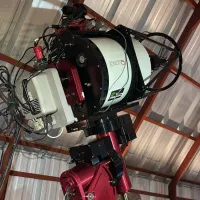
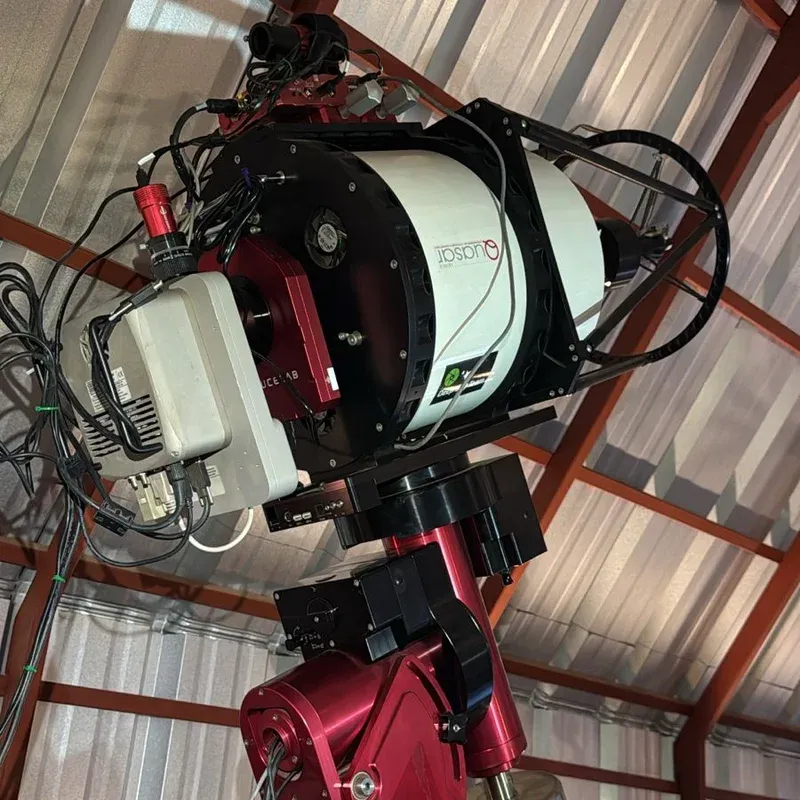
Short answer: for most modern setups, a Gaia-derived database is the best default, with UCAC4 as a lightweight fallback and GSC only for legacy compatibility. But the right choice depends on your field of view and disk space, and after years of solving frames nightly from our remote rig — first at Deming, New Mexico, now at DeepSky Chile — we have opinions grounded in what actually fails at 3 a.m.
Here is how we think about it in practice:
- ASTAP (the solver behind N.I.N.A. and many others) uses its own downloadable star databases. The Gaia-based G17 or G18 database is our default — it solves fast and rarely fails. The older H17/H18 and V-series exist for smaller downloads, but with cheap storage there is little reason not to run Gaia.
- PixInsight's ImageSolver / Gaia process pulls Gaia data directly (locally via the Gaia XPSD databases, or online). For post-processing astrometry and photometric color calibration (SPCC), Gaia is not optional — it is the reference frame.
- Astrometry.net (including the popular Nova web service and local installs) traditionally used index files built from Tycho-2, 2MASS, and USNO data; newer index sets are Gaia-based. If you self-host, match the index scale to your field of view.
The trade-offs that actually matter: wide fields (short focal length, big sensor) solve fine with almost any catalog because they contain thousands of stars; the coarser GSC still works. Narrow fields (long focal length, small chip) are where a dense, precise catalog like Gaia earns its keep, because a sparse catalog may not put enough match stars in the frame. On disk, a full Gaia database runs several gigabytes versus a few hundred megabytes for older ones — a non-issue for a modern SSD, occasionally a consideration on a cramped mini-PC at a remote site. Our standing rule: run Gaia everywhere you can, keep a UCAC4 or H18 database as a compact backup, and only touch GSC/USNO if a legacy tool demands it.
Specialist Catalogs Worth Knowing
Beyond the big families, a handful of specialist catalogs show up constantly in acquisition data and target names. Knowing them helps you decode what you are actually imaging.
- Sharpless (Sh2) — 313 HII regions (emission nebulae), the go-to catalog for narrowband targets. The North America Nebula is Sh2-117; the Wizard region is Sh2-142. If you shoot in Hydrogen-alpha, you live in Sharpless.
- Barnard (B) — dark nebulae, the cold dust clouds that block starlight, cataloged by E. E. Barnard. B33 is the Horsehead.
- Abell — two famous lists share the name: Abell planetary nebulae and Abell galaxy clusters, both challenge-level deep-sky targets.
- Washington Double Star Catalog (WDS) — the definitive reference for double and multiple stars, maintained by the U.S. Naval Observatory, with over 150,000 systems. If you image or measure doubles, WDS designations are how you identify them.
- General Catalogue of Variable Stars (GCVS) — the standard naming authority for variable stars, the source of designations like "RR Lyrae."
When a plate solver or planetarium app labels a faint object in your frame with an unfamiliar prefix, it is almost always pointing you at one of these. Our guides to reflection nebulae and other nebula types show how these catalog labels map onto what you actually capture.
How to Read Any Catalog Designation
Once you know the prefixes, you can cross-identify any target in SIMBAD, Stellarium, or your acquisition software. Here is the decoder for the ones you will meet most:
| Prefix | Catalog | Example | What it lists |
|---|---|---|---|
| M | Messier | M31 | Bright deep-sky showpieces |
| C | Caldwell | C14 | Bright objects Messier missed |
| NGC | New General Catalogue | NGC 7000 | ~7,840 deep-sky objects |
| IC | Index Catalogue | IC 434 | NGC photographic supplements |
| Sh2 | Sharpless | Sh2-155 | HII emission nebulae |
| B | Barnard | B33 | Dark nebulae |
| HD | Henry Draper | HD 209458 | Stellar spectra (~225,000 stars) |
| HIP | Hipparcos | HIP 11767 | ~118,000 precise star positions |
| TYC | Tycho-2 | TYC 3162-665-1 | ~2.5 million stars |
| UCAC4 | USNO CCD Astrograph Cat. | UCAC4 511-005 | ~113 million stars |
| Gaia DR3 | Gaia | Gaia DR3 4295806720 | ~1.8 billion stars |
| WDS | Washington Double Star | WDS 18443+3940 | Double/multiple stars |
The Henry Draper catalog (HD) deserves a note: published in the 1910s–1920s from work led by Annie Jump Cannon at Harvard, it classified the spectra of about 225,000 stars and gave us the O-B-A-F-G-K-M spectral sequence still used today. When a bright star in your frame is labeled "HD," that is where the number comes from.
Frequently Asked Questions
What is the difference between NGC and Messier?
The Messier catalog is a curated list of 110 bright deep-sky objects compiled in the 1770s–80s. The New General Catalogue (NGC) is a far larger 1888 reference of about 7,840 objects. Most Messier objects also have an NGC number (M51 = NGC 5194); the NGC simply covers many more, fainter targets.
Which star catalog is best for plate solving?
For most modern setups, a Gaia-derived database is best — it is dense, extremely accurate, and solves reliably even in narrow fields. UCAC4 makes a good compact fallback, and the older GSC or USNO catalogs are worth keeping only for legacy tools or very wide fields.
Is the Gaia catalog free to download?
Yes. Gaia data (DR2, DR3) is publicly released by ESA and free to access through the Gaia Archive and mirrors. Solver-ready subsets — like ASTAP's Gaia-based G17/G18 star databases — are also free to download for offline plate solving.
What catalog does Stellarium use?
Stellarium ships with Hipparcos and Tycho for its default naked-eye-to-telescopic stars, and lets you download deeper Gaia-based star catalogs for fainter magnitudes. Its deep-sky objects are labeled primarily by Messier, NGC/IC, and Caldwell designations.
How many stars are in the Gaia catalog?
Gaia's data releases contain astrometry for nearly 1.8 billion stars — roughly 1–2% of all the stars in the Milky Way — making it by far the largest and most precise star catalog ever produced.
What is a deep-sky catalog?
A deep-sky catalog lists extended objects beyond the Solar System — galaxies, nebulae, and star clusters — that observers photograph rather than individual stars for astrometry. Messier, Caldwell, and the NGC/IC are the best-known deep-sky catalogs.



&body=Astronomical%20Catalogs%3A%20Messier%2C%20NGC%2C%20and%20the%20Star%20Catalogs%20Behind%20Plate%20Solving%20(2026)%20%E2%80%94%20Star%20catalogs%20explained%3A%20Messier%2C%20Caldwell%2C%20NGC%2FIC%20and%20Herschel%20400%2C%20plus%20Gaia%2C%20UCAC4%2C%20GSC%20and%20USNO%20%E2%80%94%20the%20catalogs%20your%20plate-solving%20software%20actually%20uses.%20https%3A%2F%2Fstellarnomads.com%2Fastronomical-catalogs%2F%20Image%3A%20https%3A%2F%2Fstorage.ghost.io%2Fc%2Fbf%2F0d%2Fbf0d5d59-0433-4995-b3fa-4f41b743ef1b%2Fcontent%2Fimages%2F2026%2F07%2Fastronomical-catalogs-hero.jpg)