The Perseus constellation is one of the great treasure chests of the northern sky — a bright, easy-to-trace star pattern that carries a legendary hero, a star that visibly winks, a double handful of stars you can catch in binoculars, and the source of summer's most beloved meteor shower. If you learn just one autumn constellation this year, make it this one.
The Perseus constellation is a bright northern star pattern best seen on autumn and winter evenings. It is anchored by the star Mirfak and holds Algol — the "Demon Star" that dims every 2.87 days — the sparkling Double Cluster, and the radiant of the Perseid meteor shower. Look for it between Cassiopeia's "W" and the Pleiades.
Perseus is a member of the 88 official constellations recognised by the International Astronomical Union, and it sits at the heart of one of the sky's best stories. In this guide we'll show you how to find it, how to watch Algol fade with your own eyes, where to point your binoculars, and why the Perseids seem to rain from this one patch of sky every August. Along the way we'll unpack the myth that ties Perseus to half a dozen neighbouring constellations.
Perseus at a glance
Before we head outside, here is the constellation in a nutshell — the numbers and names worth knowing when you're standing under the stars.
| Feature | Detail |
|---|---|
| Abbreviation | Per |
| Genitive (used in star names) | Persei |
| Brightest star | Mirfak (Alpha Persei), magnitude 1.8 |
| Most famous star | Algol (Beta Persei) — the eclipsing "Demon Star" |
| Size | 24th largest of the 88 constellations (615 square degrees) |
| Hemisphere | Northern |
| Best evening months | November to February (Northern Hemisphere) |
| Showpiece objects | The Double Cluster, M34, the California Nebula, the Perseid radiant |
| Mythology | Perseus, the Greek hero who beheaded the Gorgon Medusa |
Perseus is a mid-sized constellation, but it punches far above its weight because of what it contains. It straddles the softly glowing band of the winter Milky Way, so sweeping through it with binoculars on a dark night is genuinely rewarding — the background is thick with faint stars.
How to find Perseus in the night sky
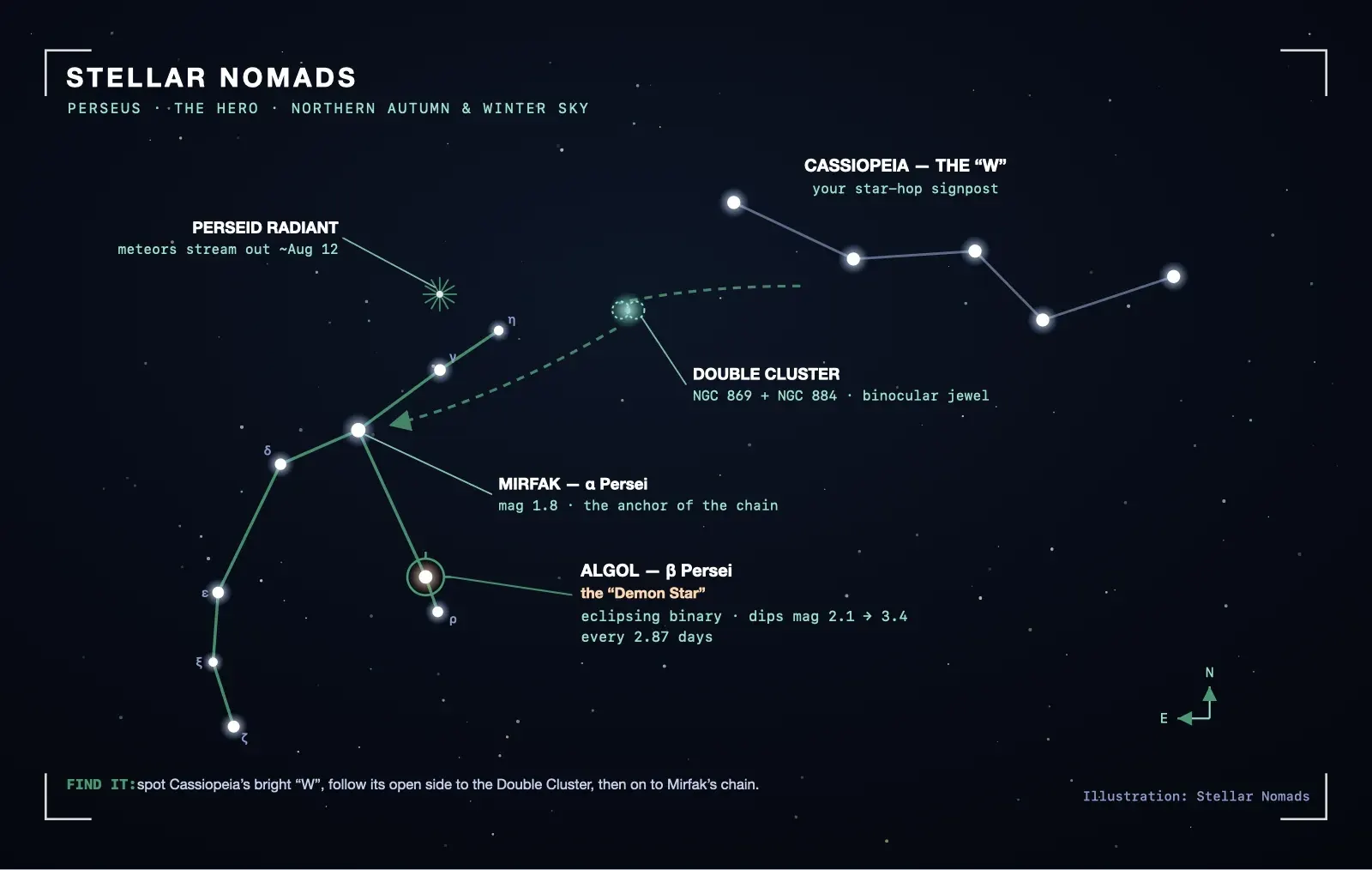
The quickest way to find the Perseus constellation is to star-hop from Cassiopeia, the unmistakable "W" of five bright stars that rides high in the north on autumn and winter evenings. Perseus lies just off the open side of that "W".
Star-hop from Cassiopeia's "W"
Find Cassiopeia first — it is bright, compact, and circumpolar (always above the horizon) from most of the Northern Hemisphere. Trace the "W" and notice which half opens more widely; that wider "V" acts like an arrowhead pointing toward Perseus. Slide your eye in that direction and you'll pass the faint glow of the Double Cluster before arriving at Mirfak, the brightest star in Perseus. From Mirfak, a graceful curving chain of stars — sometimes called the Segment of Perseus — arcs down toward the horizon. Once you've traced that chain a single time, you'll recognise it forever. If star-hopping is new to you, the same skill lets you navigate from the Big Dipper and the Little Dipper across the rest of the sky.
When is Perseus visible? The best season to see it
Perseus is highest and best placed on evenings from late autumn through winter — roughly November to February in the Northern Hemisphere — when it climbs nearly overhead after dark. It first clears the northeastern horizon in the evening around September and lingers into spring. From latitudes above about 50° north (much of Canada, the UK, and northern Europe) Perseus is effectively circumpolar, meaning some part of it stays above the horizon all night, all year.
Can you see Perseus from the Southern Hemisphere?
Partly. Because Perseus sits well north of the celestial equator, observers in the far south never see it, and even from mid-southern latitudes it only skims low above the northern horizon for a few hours around December and January. Perseus is fundamentally a Northern Hemisphere showpiece — one of the reasons it anchors so much of the northern autumn sky.
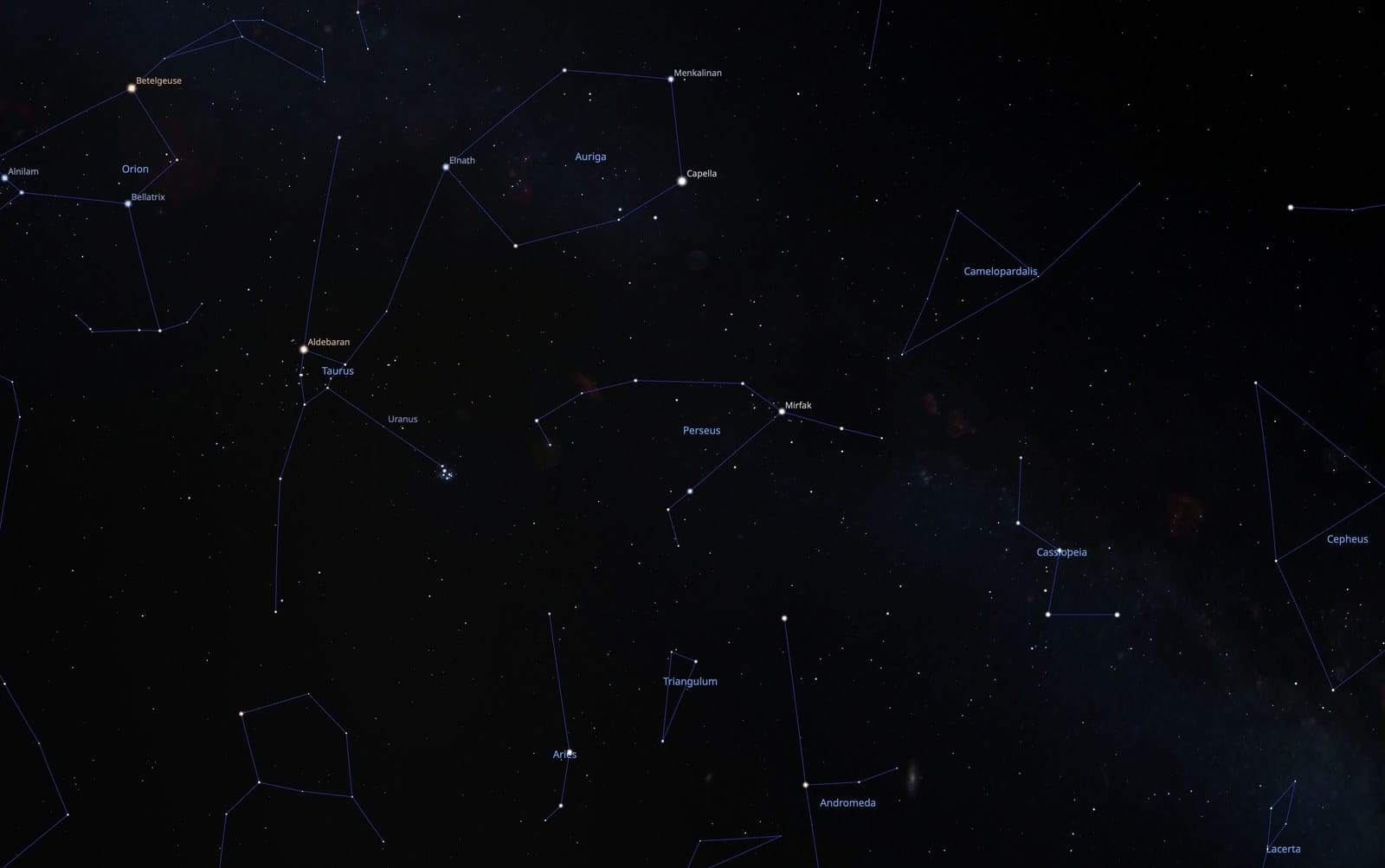
Algol — the winking "Demon Star"
Algol (Beta Persei) is the most remarkable star in Perseus, and one of the most famous variable stars in the entire sky. It is an eclipsing binary: two stars orbit so closely that, from our line of sight, the dimmer one passes in front of the brighter one every 2.87 days. When it does, Algol fades from magnitude 2.1 to 3.4 and back over about ten hours — a change you can follow with nothing but your eyes.
Ancient sky-watchers noticed this "misbehaving" star long before anyone understood why. The name comes from the Arabic ra's al-ghul, "the head of the demon", and in the Greek figure Algol marks the eye of Medusa's severed head, which Perseus holds aloft. Cultures across the world seem to have flagged Algol as unlucky or unsettling — a striking case of naked-eye observation preserved in folklore. To learn more about how such stellar pairs shine and change, see our primer on how stars work.
How to watch Algol fade for yourself
This is one of astronomy's easiest and most satisfying experiments. Look up a prediction for the next Algol minimum (many astronomy apps and almanacs list them), then compare Algol's brightness to nearby steady stars — Gamma Persei above it and Mirfak make good reference points — over the course of an evening. Watching a distant sun visibly dim in real time, then recover, is a quiet thrill that never gets old. NASA's overview of variable stars is a good place to dig deeper into the physics.
The Double Cluster — Perseus's binocular showpiece
If Algol is the star to watch, the Double Cluster is the sight to sweep up. Catalogued as NGC 869 and NGC 884 (and sometimes as Caldwell 14), it is a pair of open star clusters sitting side by side about 7,500 light-years away, between Perseus and Cassiopeia. Both clusters are young and blazing with hot blue-white stars only a few million years old.
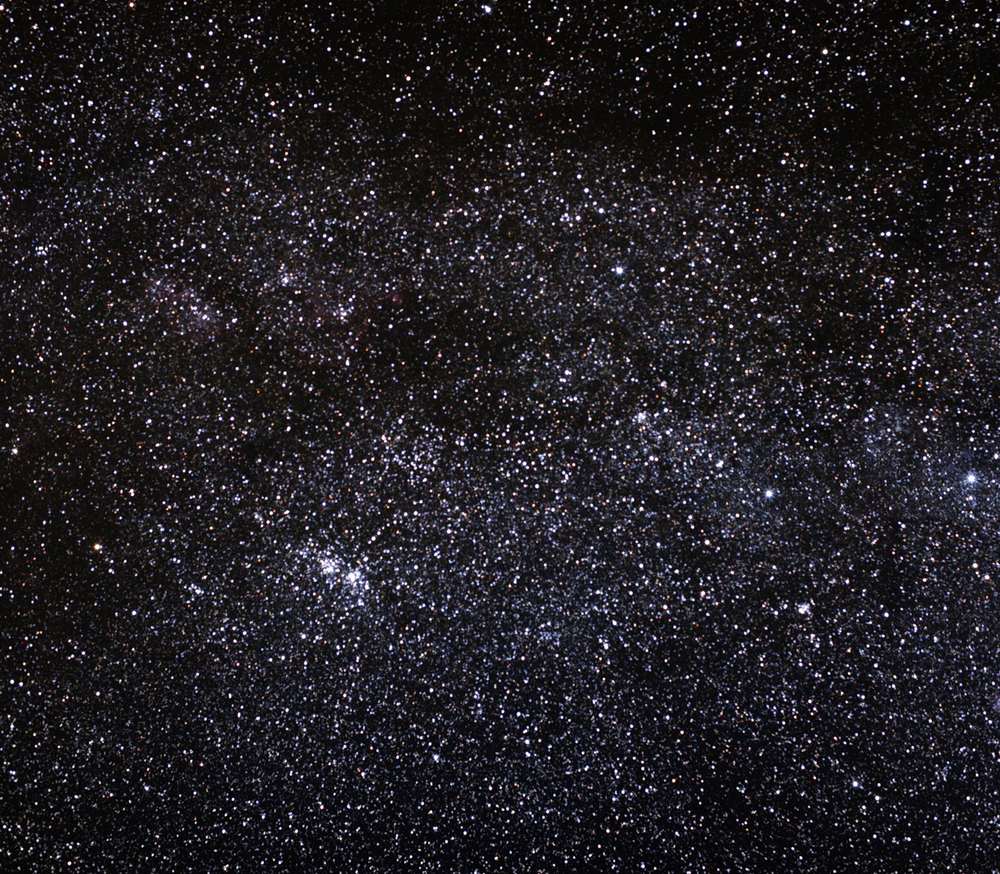
Under a dark sky the Double Cluster shows up to the unaided eye as a soft, elongated smudge in the Milky Way. Point binoculars at it, though, and the smudge resolves into two glittering swarms of stars in a single field of view — one of the finest sights available to beginners with modest gear. It is also a favourite target for astrophotographers because it frames so beautifully. Use the star-hop we described above: the Double Cluster lies right on the path from Cassiopeia's "W" to Mirfak.
The Perseid meteor shower — Perseus's August gift
The Perseid meteor shower is why many people learn the name Perseus in the first place. Peaking around 11–13 August each year, the Perseids can deliver up to roughly 100 meteors per hour under ideal dark-sky conditions, making it one of the best and most reliable showers of the year. The meteors appear to stream outward from a single point — the radiant — that lies in northern Perseus, which is exactly why the shower carries the constellation's name.
The meteors themselves are grains of dust shed by comet 109P/Swift-Tuttle, which loops through the inner Solar System every 133 years. Each August, Earth ploughs through that ancient debris trail; the specks slam into our atmosphere at around 210,000 km/h and burn up as the streaks we call shooting stars. You don't need to find Perseus to enjoy the show — just lie back and take in as much sky as you can — but tracing the meteors back to the radiant is a lovely way to connect the shower to its home constellation. For the full calendar of what to watch and when, see our guide to the year's best meteor showers, and NASA's own Perseids overview for peak forecasts.
More deep-sky treasures in Perseus
Beyond its headline sights, Perseus rewards a patient observer with several more targets worth hunting down:
- M34 — a bright, loose open cluster of around 100 stars, easy in binoculars and a nice contrast to the tighter Double Cluster.
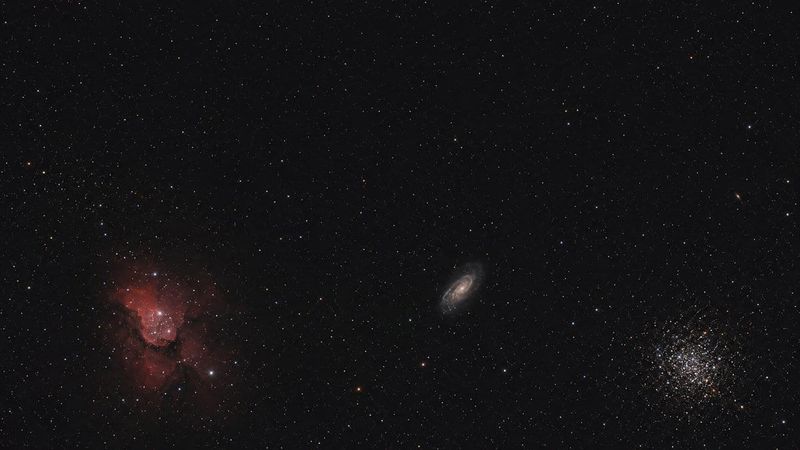
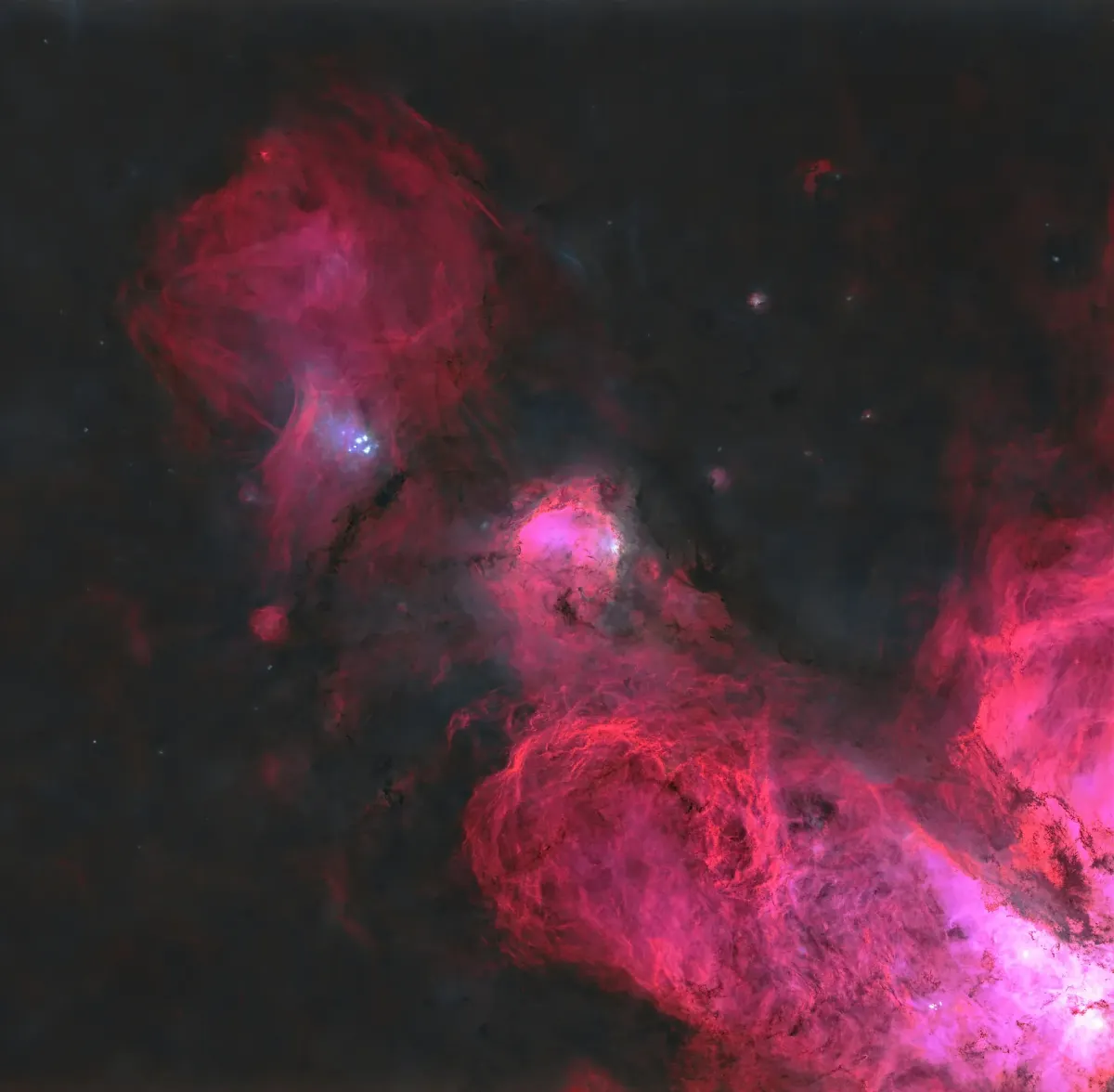
- The California Nebula (NGC 1499) — a long ribbon of glowing hydrogen near the star Menkib. It is faint to the eye but a spectacular target for astrophotography; see our guide to what an emission nebula actually is.
- The Perseus Galaxy Cluster (Abell 426) — a swarm of hundreds of galaxies about 240 million light-years away. Its central galaxy, NGC 1275, hosts a supermassive black hole whose pressure waves ripple through the surrounding gas — the source of the famous "sound" of a black hole, a note some 57 octaves below middle C.
The mythology behind Perseus
Perseus is one of the oldest constellations, listed by the Greek astronomer Ptolemy in the 2nd century and central to one of mythology's greatest adventure stories. Perseus was the son of Zeus and the mortal princess Danaë. Sent on a seemingly impossible quest, he beheaded Medusa — the snake-haired Gorgon whose gaze turned onlookers to stone — using his polished shield as a mirror so he never had to look at her directly.
Flying home with the head, Perseus came upon Princess Andromeda chained to a rock as a sacrifice to the sea monster Cetus. He used Medusa's petrifying gaze to turn the monster to stone, freed Andromeda, and married her. What makes this myth so rewarding for stargazers is that the entire cast is written across the autumn sky: Perseus, Andromeda, her parents Cassiopeia and Cepheus, the sea monster Cetus, and Pegasus — the winged horse said to have sprung from Medusa's blood. Find one, and you can hop between them all. You can explore the whole family and every other pattern in our complete guide to the 88 constellations, and read the fuller legend at Britannica.
Perseus constellation FAQ
What is the Perseus constellation known for?
Perseus is best known for Algol, the "Demon Star" that visibly dims every few days; the Double Cluster, a stunning binocular pair of star clusters; and the Perseid meteor shower, which radiates from within the constellation each August. It is also famous as the hero of the Greek Medusa and Andromeda myth.
How do you find the Perseus constellation?
Find the bright "W" of Cassiopeia high in the north, then look off its open side. You'll pass the faint Double Cluster and arrive at Mirfak, the brightest star in Perseus, with its curving chain of stars trailing below.
Why is Algol called the Demon Star?
The name comes from the Arabic ra's al-ghul, "the head of the demon", because Algol marks the eye of Medusa's severed head in the sky figure. Its eerie, regular dimming — caused by an unseen companion star eclipsing it every 2.87 days — likely reinforced the ominous reputation across many cultures.
What is the brightest star in Perseus?
The brightest star is Mirfak, also called Alpha Persei, a yellow-white supergiant shining at magnitude 1.8 about 510 light-years away. It anchors the constellation and marks the centre of the loose Alpha Persei star cluster.
When is the best time to see Perseus?
Perseus is best on evenings from late autumn through winter (about November to February in the Northern Hemisphere), when it rides high overhead. From far-northern latitudes it is circumpolar and visible on any clear night of the year.
Are the Perseid meteors part of the Perseus constellation?
Not physically — the meteors are dust from comet Swift-Tuttle burning up in Earth's atmosphere just 100 kilometres up, while the stars of Perseus are hundreds of light-years away. The shower is named for Perseus only because the meteors appear to stream from a radiant point that lies within the constellation.
Perseus is the perfect constellation to graduate to once you've mastered the pointer patterns of the northern sky. Learn its chain of stars, catch Algol mid-wink, sweep up the Double Cluster, and mark your calendar for the Perseids — and you'll have turned one patch of the autumn sky into a lifelong friend. When you're ready for more, our full constellations guide maps out every star pattern worth learning next.