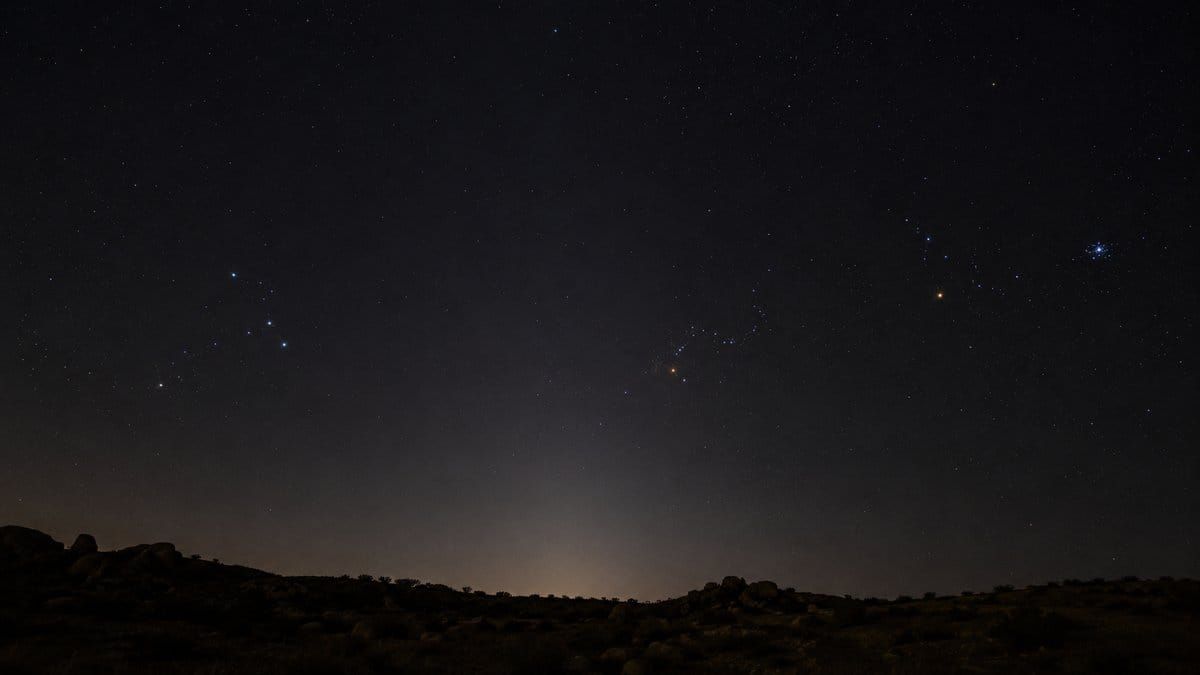
Quick answer: The zodiac constellations are the 12 (really 13) star patterns that lie along the ecliptic — the path the Sun appears to trace across the sky over a year. Aries, Taurus, Gemini, Cancer, Leo, Virgo, Libra, Scorpius, Sagittarius, Capricornus, Aquarius, and Pisces are the traditional twelve; the Sun also passes through Ophiuchus. The astronomical dates the Sun actually spends in each one differ from the astrology calendar by about a month, because Earth's axis has slowly wobbled since the signs were fixed 2,000 years ago.
The zodiac constellations are the belt of star patterns the Sun crosses during its yearly journey around the sky — and they double as the oldest calendar humanity ever built. Long before astrology turned them into personality types, these twelve figures told farmers when to plant, sailors where they were, and priests when the seasons would turn. This guide covers all twelve (plus the overlooked thirteenth), the real dates the Sun spends inside each one, exactly where to find them in the sky, and why the constellation the Sun sits in on your birthday is almost never your astrological "sign." For the full sky beyond the ecliptic, see our complete guide to all 88 constellations.
What are the zodiac constellations?
The zodiac constellations are the 13 constellations that sit along the ecliptic — the apparent path the Sun follows against the background stars over the course of a year. As Earth orbits the Sun, the Sun appears to move slowly eastward through this band of sky, spending anywhere from a week to a month and a half in each constellation before crossing into the next.
The word "zodiac" comes from the Greek zodiakos kyklos, the "circle of animals," because most of the figures are living creatures — a ram, a bull, a lion, a scorpion. The band is about 16 degrees wide, and it matters far beyond astrology: because the Solar System is roughly flat, the planets and the Moon are always found within this same strip of sky. If you spot a bright "star" that isn't on any chart, it's almost certainly a planet parked in a zodiac constellation.
For a clear visual walk-through of how the Sun’s yearly path threads through these star patterns, this Adler Planetarium explainer is worth a watch:
The 12 zodiac constellations and their dates
Here are the twelve traditional zodiac constellations in the order the Sun visits them, with the real astronomical dates it spends in each. The "best evening month" is when the constellation stands highest after dark — the opposite side of the year from when the Sun is inside it, because a constellation is invisible while the Sun is passing through.
| Constellation | Sign meaning | Sun passes through | Brightest star | Best evening month |
|---|---|---|---|---|
| Aries | The ram | Apr 18 – May 13 | Hamal | December |
| Taurus | The bull | May 13 – Jun 21 | Aldebaran | January |
| Gemini | The twins | Jun 21 – Jul 20 | Pollux | February |
| Cancer | The crab | Jul 20 – Aug 10 | Tarf | March |
| Leo | The lion | Aug 10 – Sep 16 | Regulus | April |
| Virgo | The maiden | Sep 16 – Oct 30 | Spica | May |
| Libra | The scales | Oct 30 – Nov 23 | Zubeneschamali | June |
| Scorpius | The scorpion | Nov 23 – Nov 29 | Antares | July |
| Ophiuchus* | The serpent-bearer | Nov 29 – Dec 17 | Rasalhague | July |
| Sagittarius | The archer | Dec 17 – Jan 20 | Kaus Australis | August |
| Capricornus | The sea goat | Jan 20 – Feb 16 | Deneb Algedi | September |
| Aquarius | The water-bearer | Feb 16 – Mar 11 | Sadalsuud | October |
| Pisces | The fishes | Mar 11 – Apr 18 | Alpherg | November |
*Ophiuchus is not a traditional zodiac sign, but the Sun genuinely spends about 18 days inside its boundaries each year — more time than it spends in Scorpius. We cover why below.
The stories behind the zodiac constellations
Most of the zodiac's meanings reach back through Greek myth to far older Babylonian skywatchers, and the figures cluster into a handful of tales. Aries is the golden-fleeced ram of the Jason legend; Taurus, the bull Zeus became to carry off Europa. Gemini honors the twin brothers Castor and Pollux, and Cancer is the crab Hera sent to pester Hercules — who crushed it, earning it a dim, forgettable spot in the sky.
The spring and summer figures carry the heavyweights. Leo is the Nemean lion Hercules slew; Virgo, most often the harvest goddess, holds the wheat-ear star Spica. Libra, the scales, is the youngest of the twelve — the Romans split it off from the claws of neighboring Scorpius, the scorpion that killed the hunter Orion and was placed on the opposite side of the sky so the two never meet. Sagittarius is the archer-centaur aiming his arrow at the scorpion's heart. The final three are watery: Capricornus the sea-goat, Aquarius the water-bearer, and Pisces the two fish tied by their tails — a stretch of sky the ancients called "the Sea." Knowing the story makes each pattern far easier to remember on a dark night.
Where to find the zodiac constellations in the sky
The single most useful fact for locating any zodiac constellation: they all lie along one line. Trace the ecliptic and you trace the whole zodiac. The ecliptic runs low across the southern sky for Northern Hemisphere observers and high overhead for Southern Hemisphere ones, and it's marked out for you every clear night by the Moon and planets, which never stray far from it.
A few practical anchors make the belt easy to navigate:
- Find the ecliptic with the Moon. Wherever the Moon is tonight, it's sitting in or beside a zodiac constellation, and the whole belt runs through that point in a great arc from east to west.
- Use the bright signposts. Four zodiac constellations carry first-magnitude stars that cut through light pollution: orange Aldebaran (Taurus), blue-white Regulus (Leo), blue Spica (Virgo), and red Antares (Scorpius). Learn those four and you've pinned the belt in every season.
- Follow the seasons. The evening zodiac changes through the year: Taurus and Gemini rule winter nights, Leo and Virgo the spring, Scorpius and Sagittarius the summer (with the Milky Way's core behind them), and Pisces and Aries the autumn.
Hemisphere matters, too. From mid-northern latitudes the summer signs — Scorpius, Sagittarius, Capricornus — hug the southern horizon and can be partly hidden, while Southern Hemisphere observers get them gloriously high overhead. Wherever you are, the zodiac is your on-ramp to the layout of the solar system, because the planets are always somewhere along it.
Zodiac constellations vs. zodiac signs: why the dates don't match
Here's the fact that surprises almost everyone: the constellation the Sun occupies on your birthday is usually not the astrological sign you were told. If you're a "Leo" born in early August, the Sun is actually in Cancer; a late-March "Aries" has the Sun in Pisces. The whole calendar has slipped by about one sign.
The reason is precession. Earth's axis traces a slow circle, like a spinning top winding down, completing one wobble every 25,800 years. Astrology's dates were fixed by Babylonian and Greek astronomers roughly 2,000 years ago and never updated, so they've drifted almost a full constellation out of step with the real sky. Astrology also divides the year into twelve equal 30-day "signs," whereas the actual constellations are wildly unequal in size — the Sun races through Scorpius in under a week but lingers in Virgo for a month and a half.
In short: the signs are a fixed, evenly divided calendar system used in astrology; the constellations are the real, unequal star patterns the Sun passes through today. This guide is about the constellations — the astronomy — and we'll leave the horoscopes to others. (Astronomically speaking, the stars in these patterns have no influence on human affairs; they're simply beautiful, useful markers on the sky.)
Ophiuchus: the 13th zodiac constellation
Ophiuchus, the serpent-bearer, is the zodiac constellation astrology forgot. When the IAU drew official constellation boundaries in 1930, the ecliptic was found to clip through the bottom of Ophiuchus, between Scorpius and Sagittarius. The Sun spends about 18 days there each year, from roughly November 29 to December 17 — longer than the six days it spends in neighboring Scorpius.
Ophiuchus isn't new and it isn't a discovery; it's an ancient Greek constellation (one of Ptolemy's original 48) that simply never made it into the twelve-part astrological zodiac, which was standardized for calendar convenience. Every few years a headline announces that astrology "added a 13th sign" — but nothing changed in the sky. The Sun has always crossed Ophiuchus; the traditional zodiac just rounds the count to twelve. You'll find it high in the summer sky, a large but faint dome of stars wedged above Scorpius.
How to see the zodiac constellations tonight
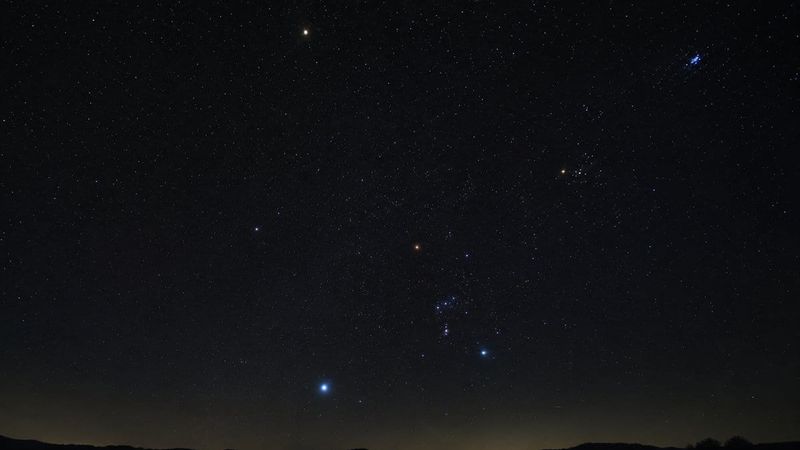
You don't need a telescope — the zodiac is a naked-eye tour. Start with tonight's Moon or the brightest "star" that turns out to be a planet, and you've found the ecliptic; the belt stretches away on either side. Then work outward to the bright anchor stars for the current season.
Three tips make it painless. First, get away from the worst city glow if you can — the fainter zodiac figures like Cancer and Pisces dissolve under bright skies (here's how light pollution affects what you can see). Second, use a free planetarium app or Stellarium to label the ecliptic and confirm which constellation the Moon and planets are in tonight. Third, learn one bright zodiac star per season — Aldebaran, Regulus, Spica, Antares — and let each lead you to its constellation. Within a year you'll know the whole belt.
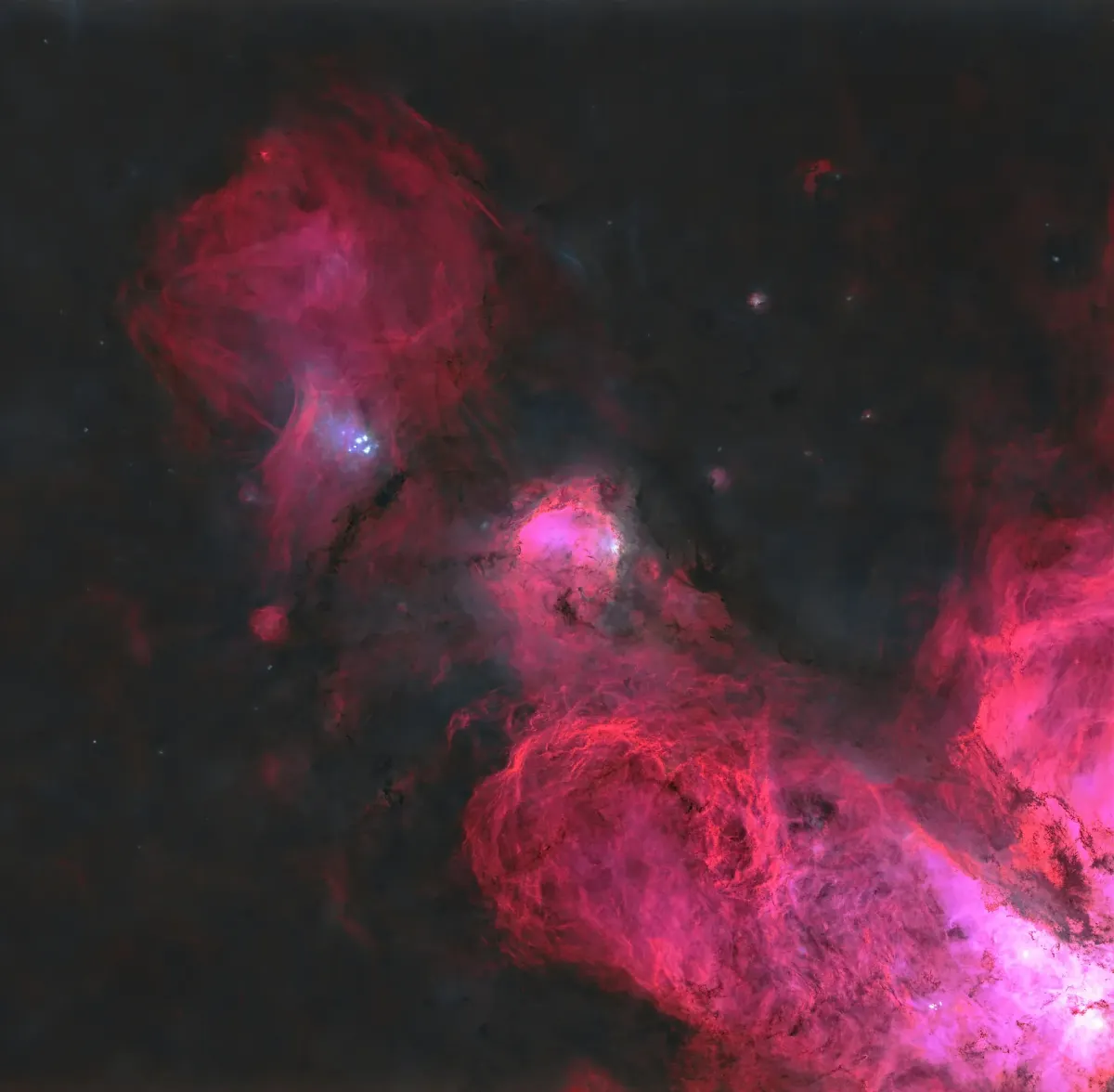
For imagers, the zodiac is prime real estate: it's where every planet, the Moon, and superb deep-sky targets like the Beehive Cluster in Cancer and the Lagoon Nebula in Sagittarius live. Plan a wide-field shot of the ecliptic with our field-of-view simulator, and if you're new to it, start with our astrophotography fundamentals guide.
Zodiac constellations FAQ
How many zodiac constellations are there?
Twelve by tradition — Aries through Pisces — but the Sun's path actually crosses thirteen constellations, spending about 18 days each year in Ophiuchus, the serpent-bearer, which the astrological zodiac leaves out.
Are zodiac signs and zodiac constellations the same thing?
No. The signs are twelve equal 30-day divisions used in astrology, fixed 2,000 years ago. The constellations are the real, unequal star patterns the Sun passes through today. Because of precession, the two have drifted about one full sign apart, so your astrological sign usually isn't the constellation the Sun was in when you were born.
What zodiac constellation is the Sun in today?
It depends on the date — use the "Sun passes through" column in the table above, which lists the real astronomical windows. For example, the Sun is in Gemini from about June 21 to July 20, not the astrological Gemini dates of May 21 to June 21.
Which zodiac constellation is the brightest and easiest to find?
Scorpius and Leo are the standouts. Scorpius genuinely looks like its namesake, curling around fiery red Antares, and Leo's backwards-question-mark "Sickle" is unmistakable each spring. Taurus, with orange Aldebaran and the Pleiades cluster, is the easiest winter target.
Why do the planets always appear in the zodiac?
Because the Solar System is nearly flat. The planets orbit in almost the same plane as Earth, so from our viewpoint they're always projected onto the same narrow band of sky as the Sun's path — the zodiac. That's why the Moon and planets are reliable guides to the ecliptic.
About the author — Hamza is an astrophotographer who has been imaging the night sky since 2008. He operates a remote deep-sky rig at Deepsky Chile (a 12.5″ Alluna Ritchey-Chrétien on a Paramount MX+ with an SBIG STL-11000 camera) under some of the darkest skies on Earth, and shares his work on Instagram @stellar.nomads.