The Rare Earth hypothesis argues that while simple microbial life may be common across the universe, complex life like animals and intelligence is vanishingly rare — because it depends on an improbable stack of conditions that Earth happened to get all at once. If it is right, we may be nearly alone.
Is Earth ordinary or extraordinary? For decades the fashionable answer was that our planet is nothing special — one of billions. The Rare Earth hypothesis pushes back hard. It accepts that microbes might be everywhere, but argues that the leap to complex, intelligent life requires such a precise combination of lucky circumstances that worlds like ours could be almost unique. This guide lays out the ingredients Earth needed, the evidence for and against, and why the idea offers one of the most sobering answers to the great cosmic silence.
It is a pillar of our astrobiology series and a specific, powerful version of the barriers explored in the Great Filter and the Fermi paradox.
What is the Rare Earth hypothesis?
The Rare Earth hypothesis proposes that complex life — plants, animals, and ultimately intelligence — is extremely uncommon in the universe, even if microbial life is widespread. The key move is to separate two very different things. Simple, single-celled life may arise easily wherever there is water and energy. But building a stable, complex biosphere that lasts billions of years, long enough for intelligence to evolve, may require a rare confluence of astronomical and geological good fortune.
In this view, the galaxy could be dotted with bacteria-covered worlds and yet almost devoid of anyone to talk to. Life would be common; company would be rare.
For a deeper dive, this PBS Space Time episode is a great companion:
Where the idea came from
The hypothesis was set out in the influential 2000 book Rare Earth: Why Complex Life Is Uncommon in the Universe, by paleontologist Peter Ward and astronomer Donald Brownlee. Drawing on geology, paleontology, and astronomy together, they argued that the scientific mainstream had underestimated just how many things had to go right for animals to appear on Earth. Their book gave the idea its name and turned it into a serious counterweight to more optimistic views of alien life.
The ingredients for complex life
The core of the argument is a checklist of conditions, each individually plausible but collectively improbable. Here are the major ones.
| Ingredient | Why complex life may need it |
|---|---|
| A galactic habitable zone | A location in the galaxy with enough heavy elements to build planets, but away from deadly radiation near the core |
| The right kind of star | Stable, long-lived, and not prone to violent flares — giving evolution billions of undisturbed years |
| The habitable zone | An orbit where liquid water can persist on the surface |
| Plate tectonics | Recycles carbon, regulates climate, and helps drive a protective magnetic field |
| A large moon | Stabilizes the planet's tilt, keeping the climate steady over long timescales |
| A giant-planet neighbor | A Jupiter to deflect many comets and asteroids away from the inner system |
| The right timing | Enough stability, and the right pace of change, for complexity to slowly build |
Any one of these might be fairly common. The Rare Earth argument is that finding all of them together, on the same world, for billions of years, is what turns out to be rare. A couple of these ingredients are worth a closer look.
Take the galactic habitable zone. Too close to the crowded galactic center, frequent supernovae and intense radiation could repeatedly sterilize worlds; too far out toward the rim, stars are poor in the heavy elements needed to build rocky planets and living chemistry at all. Only a relatively narrow ring of the galaxy may offer the right balance — and our Sun happens to sit comfortably within it.
The role of our large Moon
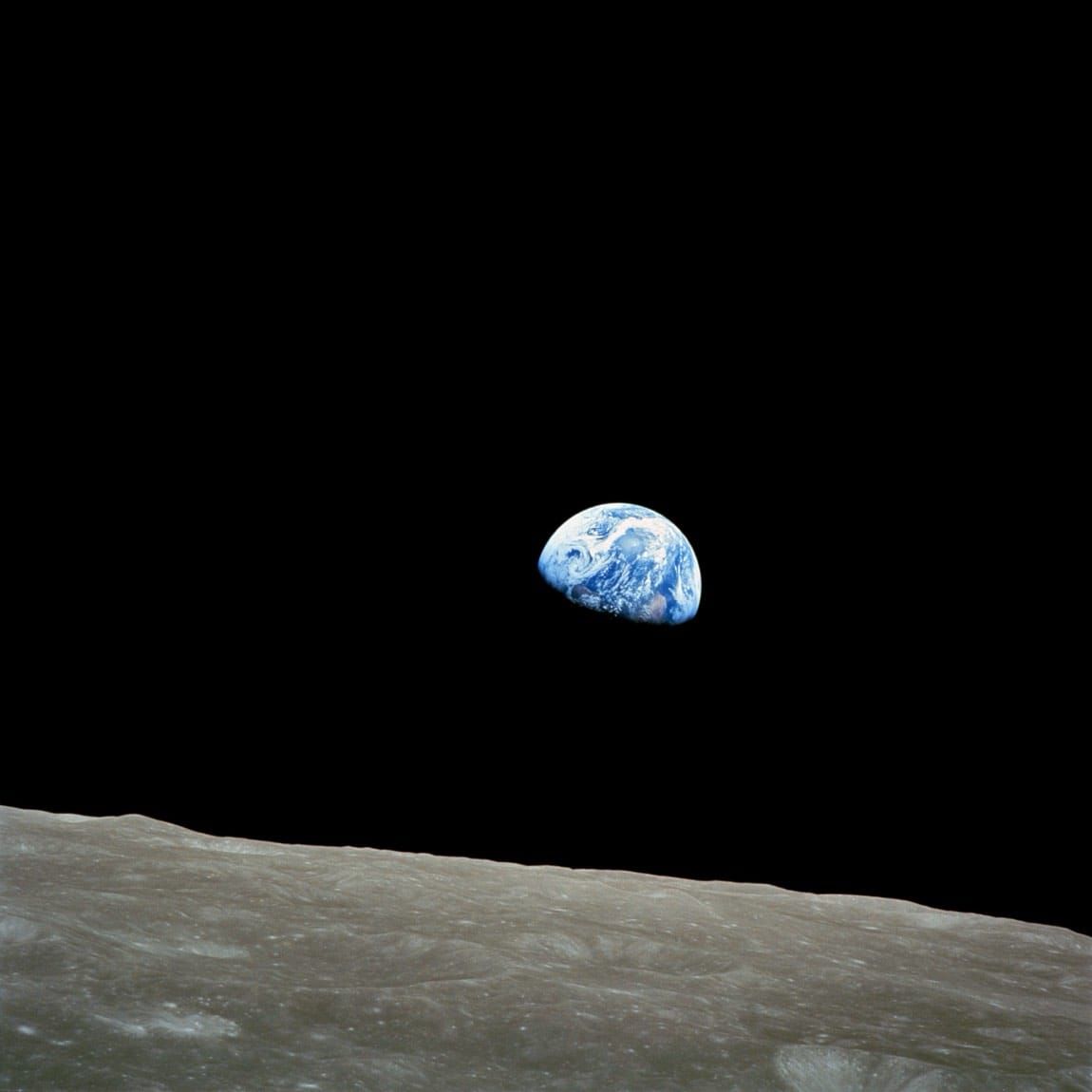
One of the hypothesis's most striking claims concerns the Moon. Earth's Moon is unusually large relative to its planet, and its gravity acts as a stabilizer, holding Earth's axial tilt steady at around 23 degrees. That steadiness keeps our seasons and climate relatively predictable over millions of years.
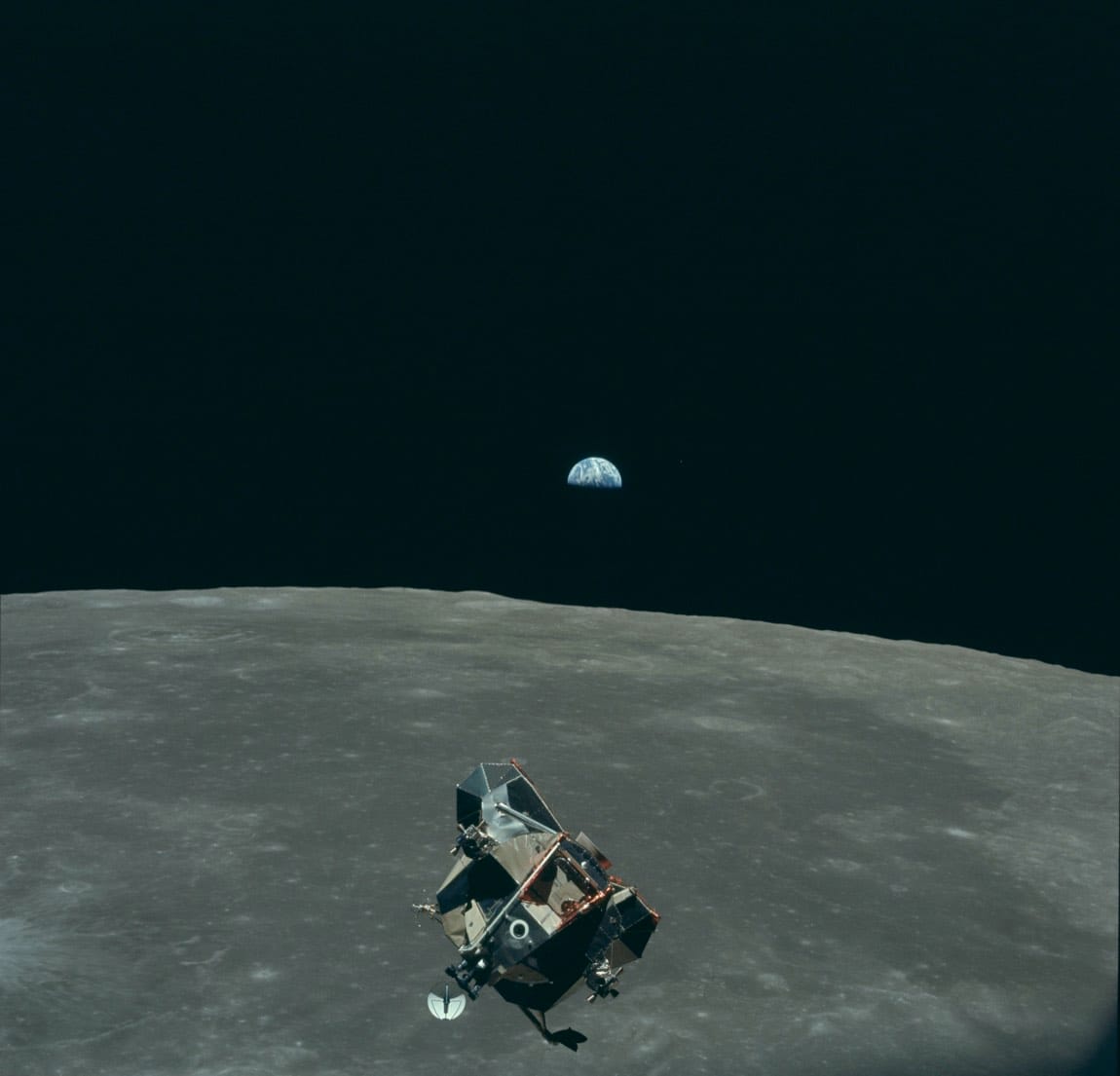
Without such a moon, a planet's tilt could wobble chaotically over time, sending it through wild climate swings that might repeatedly reset any complex life trying to gain a foothold. Since our Moon likely formed in a rare giant impact early in Earth's history, the Rare Earth hypothesis treats it as a lucky accident that many otherwise habitable worlds would lack.
The role of Jupiter and cosmic timing
A second key ingredient is a giant outer planet. Jupiter's immense gravity deflects or captures many comets and asteroids that might otherwise strike the inner solar system, reducing the frequency of catastrophic impacts. The idea is that without such a shield, a life-bearing world might be sterilized too often for complexity to accumulate.
The picture is not simple — Jupiter can also fling objects inward, and the balance is debated — but the broader point stands: complex life may need a relatively calm, well-ordered planetary system, and not every system provides one. Timing matters too. Earth needed billions of years of relative stability, plus the slow rise of atmospheric oxygen, before animals could appear at all.
Earth's own record shows how drawn-out that process was. For most of our planet's history it hosted nothing but microbes. Oxygen built up only gradually, through the Great Oxidation Event and later rises, and complex animals did not burst onto the scene until the Cambrian explosion, more than three billion years after life began. To Rare Earth's authors, that vast delay is a clue that the road to complexity is strewn with hard, slow, luck-dependent steps rather than an easy climb.
Microbes everywhere, animals almost nowhere
This is the crucial and often-missed nuance. The Rare Earth hypothesis is not pessimistic about life in general — it is quite open to microbes being common. Simple organisms are tough, adaptable, and appeared on Earth almost as soon as conditions allowed. They thrive in boiling vents, acidic pools, and deep rock.
What the hypothesis doubts is the ease of the next steps: complex cells, multicellular bodies, large animals, and finally intelligence. On Earth those steps took billions of years and several strokes of luck. If they are as hard as Ward and Brownlee suggest, the universe could be full of pond scum and nearly empty of anyone building telescopes. That distinction is exactly why finding simple life elsewhere would not, on its own, refute the idea.
It also reframes what a positive result would mean. Discovering fossilized microbes on Mars would be one of the great findings in history — but it would say little about whether animals or minds exist elsewhere. Those are the steps Rare Earth claims are hard, and only finding genuinely complex life beyond Earth could truly put the hypothesis to the test.
Rare Earth versus the principle of mediocrity
The hypothesis is a direct challenge to what scientists call the principle of mediocrity — the Copernican idea that Earth is nothing special, just an average planet in an average spot. That principle has served science well: we have learned again and again that we are not the center of anything.
Rare Earth argues the pendulum swung too far. Yes, Earth is an ordinary rock in terms of physics and chemistry — but the specific combination that allowed complex life to flourish here may be genuinely exceptional. Being cosmically ordinary and biologically extraordinary are not contradictions, the argument goes; they can both be true at once.
Criticisms of the Rare Earth hypothesis
The idea is far from settled, and it has thoughtful critics.
- The sample-of-one problem. We know of exactly one biosphere. Concluding that its features are essential — rather than merely one path among many — is a huge leap from a single example.
- Life is inventive. Organisms on Earth keep colonizing environments once thought impossible. Complex life might arise through routes, or under conditions, we have not imagined.
- Carbon and Earth chauvinism. Assuming aliens need exactly what we needed may reflect a failure of imagination rather than a law of nature.
- The ingredients may be less special. Some proposed requirements, like a large moon or plate tectonics, are actively debated and may turn out to be more common, or less essential, than claimed.
In short, the hypothesis may be right, but our evidence is thin. It is a well-argued hunch built on one data point — and, like its optimistic rivals, it awaits the discovery that would settle the matter.
What the exoplanet era has revealed
Two decades of exoplanet discovery have handed both sides ammunition. On one hand, planets are everywhere and rocky worlds in the habitable zone are common, which encourages optimism. On the other, we have found a startling variety of chaotic systems — scorching "hot Jupiters" that migrated inward, tightly packed orbits, and wildly eccentric paths — and very few that resemble our calm, well-ordered solar system with its distant giant planets. If the orderly architecture of our own system turns out to be unusual, that would quietly support the Rare Earth view. As of 2026, with more than 5,800 exoplanets cataloged, we still have not found a clear twin of the solar system.
Rare Earth, the Great Filter, and the Fermi paradox
The Rare Earth hypothesis is essentially a proposal about where an early filter sits. If the conditions for complex life are as rare as it suggests, then the great barrier lies behind us: the hard step was becoming complex at all, and having cleared it, we may be among the very few. This is the reassuring flavor of the Great Filter — it implies our future could be open.
For the Fermi paradox, Rare Earth offers a clean answer to "where is everybody?": almost nowhere, because almost nowhere did the improbable recipe come together. It also feeds directly into the low end of the Drake equation, shrinking the fraction of habitable worlds that ever produce intelligence. If Earth really is rare, the silence is not a mystery at all — it is simply what a nearly empty galaxy sounds like.
Frequently asked questions about the Rare Earth hypothesis
What is the Rare Earth hypothesis in simple terms?
It is the idea that simple microbial life may be common in the universe, but complex life like animals and intelligence is extremely rare, because it needs an improbable combination of conditions that Earth happened to have.
Who proposed the Rare Earth hypothesis?
Paleontologist Peter Ward and astronomer Donald Brownlee set it out in their 2000 book Rare Earth: Why Complex Life Is Uncommon in the Universe.
What conditions does complex life supposedly need?
A stable long-lived star, a habitable-zone orbit, plate tectonics, a large stabilizing moon, a giant planet like Jupiter to deflect impacts, the right galactic location, and billions of years of stability.
Does the Rare Earth hypothesis say we are alone?
Not entirely. It suggests microbes may be widespread, but that complex, intelligent life is so rare we could be nearly alone in our galaxy. It does not claim life is impossible elsewhere.
What is the main criticism of the hypothesis?
That it draws sweeping conclusions from a single example — Earth. Critics argue life may be far more adaptable, and that the "required" conditions may be less special than the theory assumes.
How does it relate to the Fermi paradox?
It offers a direct answer: the galaxy is silent because complex, communicating life almost never arises. In Great Filter terms, it places the hardest barrier in our past rather than our future.
Keep exploring the universe
This post is part of our astrobiology cluster, anchored by the Fermi paradox. Continue with the Great Filter, the habitable zone, and how stars work.
Sources and further reading: NASA: the search for life, SETI Institute, and the Rare Earth hypothesis (overview).