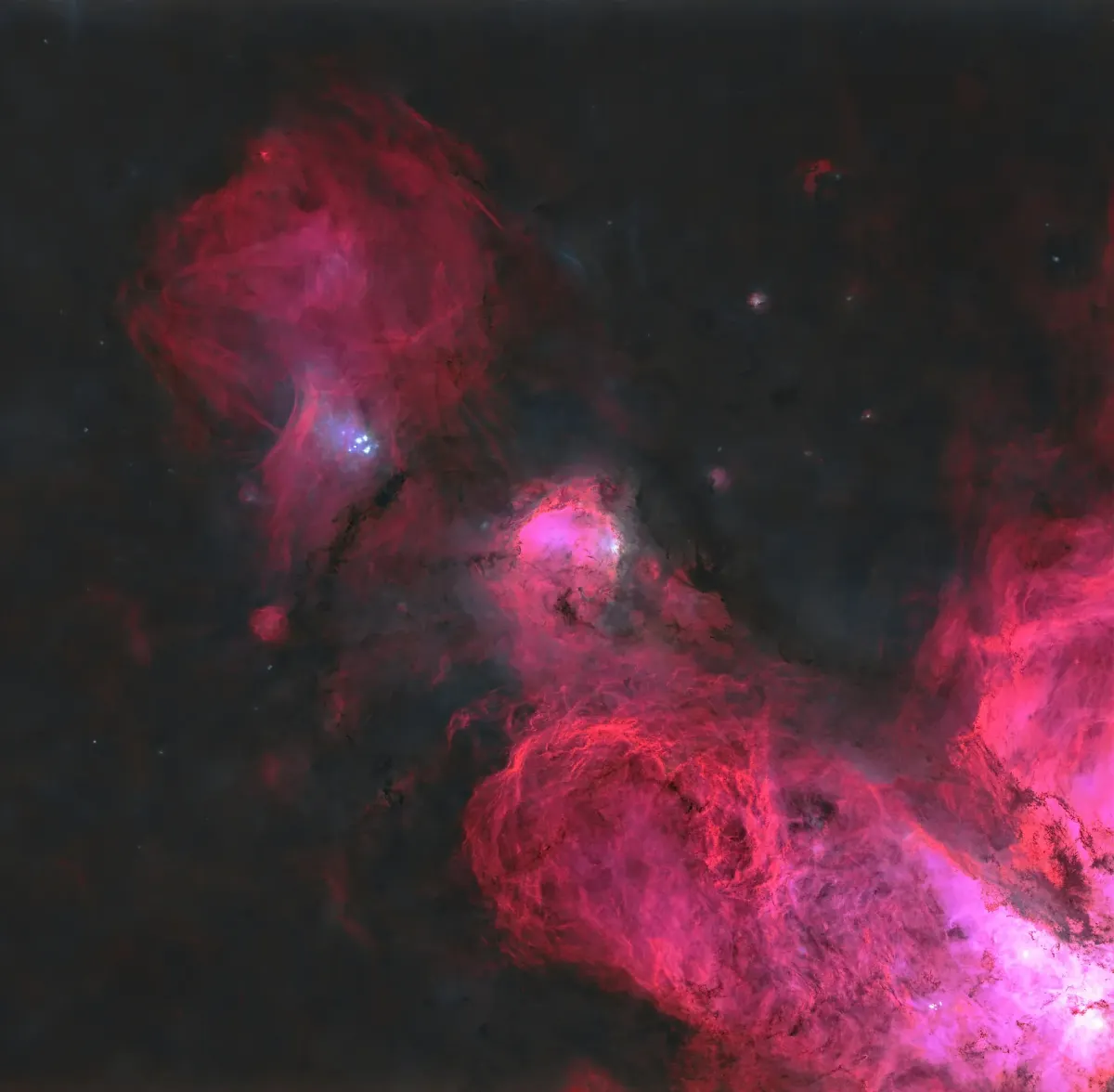
The Fermi paradox is the stark contradiction between the high likelihood that alien civilizations should exist and the complete absence of any evidence for them. In a galaxy of hundreds of billions of stars, the physicist Enrico Fermi framed the question that still has no answer: "Where is everybody?"
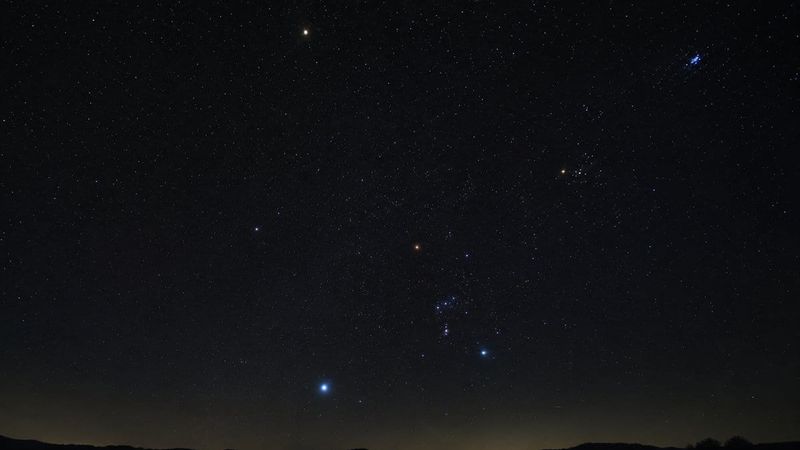
Look up on a clear night from a truly dark site and you are staring at a few thousand stars — a rounding error against the hundreds of billions our galaxy actually holds. Multiply that by roughly two trillion galaxies in the observable universe and the arithmetic seems to force a conclusion: we cannot possibly be alone. And yet, after decades of listening, we have heard nothing. That silence is the heart of the Fermi paradox, and it is one of the most unsettling open questions in all of science.
This guide is the Fermi paradox explained from the ground up — what it is, why it matters, and the leading theories that try to resolve it. It is the hub of our growing astrobiology series, so you will find pointers to deeper dives on each proposed solution along the way.
What is the Fermi paradox?
The Fermi paradox is the conflict between two things that both appear to be true at once. First, the universe is old and enormous, with countless stars that are older than our Sun and countless planets that could, in principle, support life. Second, we have found no confirmed sign of any other civilization — no probes, no visits, no radio broadcasts, nothing. If intelligent life is likely, the galaxy should be full of it. So where is everybody?
The paradox is named for the Italian-American physicist Enrico Fermi, one of the architects of the atomic age. During a lunch at Los Alamos National Laboratory in the summer of 1950, the conversation turned to flying saucers and interstellar travel. Fermi, doing quick mental math as he always did, blurted out a version of the now-famous question: "But where is everybody?" His point was simple and devastating — given the numbers, they should already be here, or at least detectable.
Fermi never wrote the idea down. It was formalized decades later by scientists such as Michael Hart in 1975 and physicist Frank Tipler, who argued that the absence of extraterrestrials was itself meaningful evidence. Today the phrase "Fermi paradox" is shorthand for the whole tension between cosmic abundance and cosmic silence.
Why it is called a paradox
Strictly speaking, it is not a logical paradox like a self-contradicting sentence. It is an empirical puzzle: our best reasoning about probability points one way, and our observations point the other. Resolving it means either our reasoning is wrong, our observations are incomplete, or reality is stranger than we assume. Every serious answer falls into one of those three baskets, as you will see below.
For a visual companion, this Kurzgesagt explainer pairs well with this guide:
The numbers behind "where is everybody?"
To feel the force of the paradox, you have to sit with the scale. The Sun is one fairly ordinary star among an estimated 100 to 400 billion in the Milky Way. Many of those stars are billions of years older than ours, meaning any civilization around them had a colossal head start. As of 2026, astronomers have confirmed more than 5,800 exoplanets, and statistical models suggest the galaxy contains billions of roughly Earth-size worlds in the temperate zone where liquid water can exist.
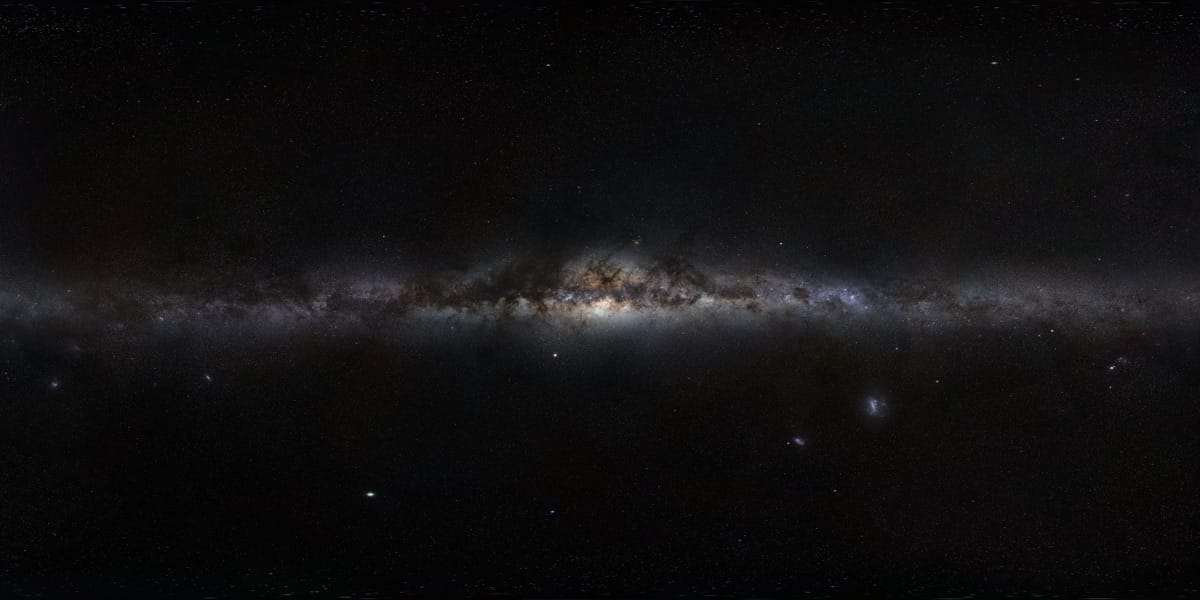
In 1961, astronomer Frank Drake tried to turn this intuition into a formula. The Drake equation strings together the factors that would determine how many communicating civilizations exist in our galaxy — the rate of star formation, the fraction of stars with planets, the fraction of planets that are habitable, and so on. Depending on the numbers you plug in, the equation predicts anything from a single lonely civilization (us) to millions of them. That enormous range is exactly why the paradox refuses to die. Our in-depth guide to the Drake equation is coming soon.
The point is this: even if the odds of life arising on any given world are tiny, the sheer number of worlds should still produce many civilizations over billions of years. Some of them should have had time to spread across the galaxy long before humans existed. And that is what makes the silence so loud.
The Great Silence: what SETI has found
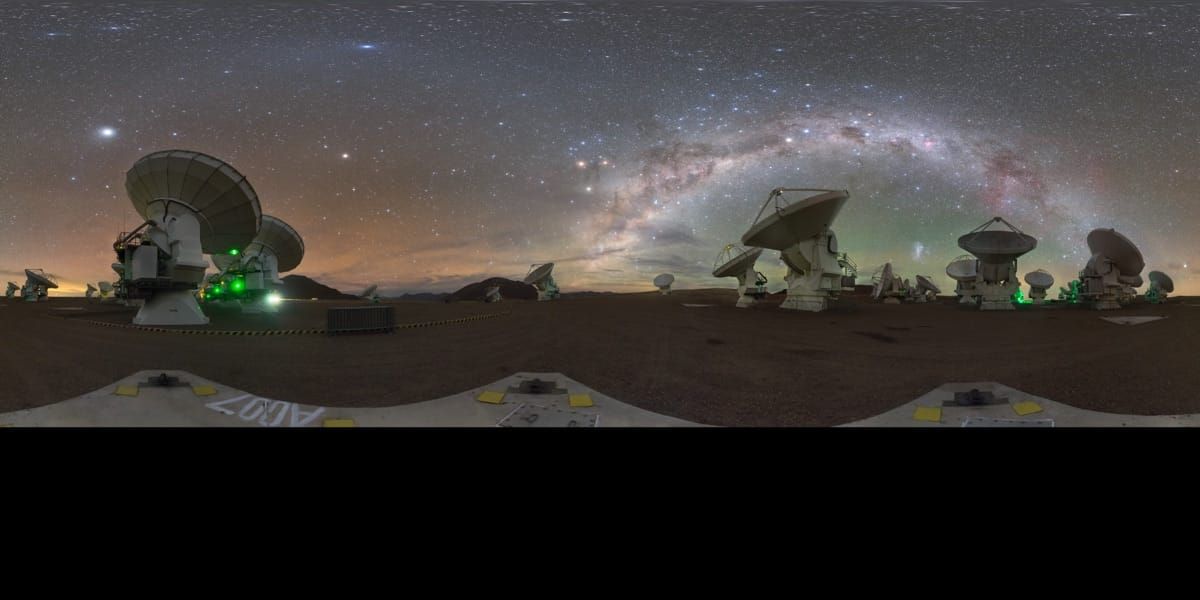
Since 1960, when Frank Drake pointed a dish at two nearby stars in Project Ozma, humanity has been actively searching for signals in a program known broadly as SETI — the Search for Extraterrestrial Intelligence. Using instruments like the Allen Telescope Array in California, researchers scan millions of radio frequencies for anything that looks artificial rather than natural.
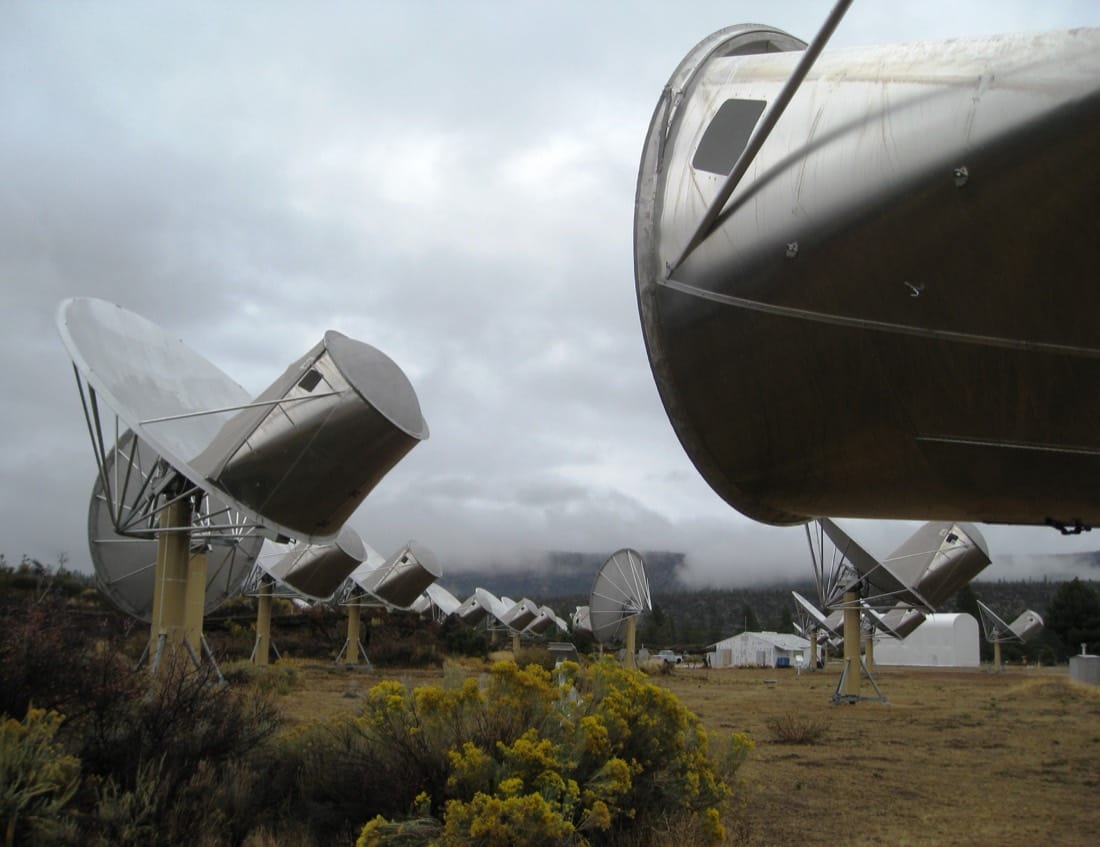
The result, so far, is nothing conclusive. The most tantalizing moment came in 1977, when Ohio State University's Big Ear telescope recorded a strong, narrow signal that an astronomer circled on the printout with the note "Wow!" The Wow! signal was never detected again and has never been explained. Beyond that single event, the sky has been quiet. To understand how we listen across these vast distances, see our guide to radio astronomy and how we see the universe in radio waves.
It is worth being honest about the limits of the search. We have only sampled a tiny fraction of the sky, across a narrow range of frequencies, for a few decades. A civilization could be broadcasting in a form we do not recognize, or not broadcasting at all. The Great Silence is real, but it is not yet proof of absence.
The main theories: solutions to the Fermi paradox
There is no shortage of proposed answers. The most useful way to organize the leading Fermi paradox theories is by which of our three baskets they fall into: they don't exist, they exist but stay silent, or they exist but we cannot detect them yet.
| Category | Leading theory | Core idea |
|---|---|---|
| They don't exist | Rare Earth hypothesis | Complex life needs an improbable stack of conditions, so we may be nearly unique. |
| They don't exist (yet or anymore) | The Great Filter | Some barrier stops almost all life before it becomes a galaxy-spanning civilization. |
| They exist but stay silent | Dark forest theory | Civilizations hide because announcing yourself is dangerous. |
| They exist but stay silent | Zoo hypothesis | Advanced aliens deliberately avoid contact, observing us from a distance. |
| They exist but we can't detect them | Scale and distance | The galaxy is so vast that signals, and civilizations, simply miss each other in space and time. |
Rare Earth: maybe complex life is genuinely rare
Proposed by paleontologist Peter Ward and astronomer Donald Brownlee in 2000, the Rare Earth hypothesis argues that microbial life may be common but complex, intelligent life is vanishingly rare. Earth may have benefited from an unusually lucky combination — a stabilizing large Moon, a giant planet like Jupiter shielding us from comets, plate tectonics, a well-placed orbit in the galaxy, and more. If any one of these is essential, the number of civilizations could collapse toward one. A full Rare Earth hypothesis guide is on the way.
The Great Filter: a barrier somewhere in our past or future
Economist Robin Hanson framed the Great Filter in 1996. The idea is that the path from dead chemistry to a star-faring civilization must pass through at least one improbable step — the filter. If the filter is behind us (say, the origin of life itself, or the leap to complex cells), then we are rare and the future is bright. If the filter is ahead of us, it means civilizations reliably destroy themselves before spreading, which is a chilling thought. This is why the search for even simple alien life carries such weight. Our dedicated Great Filter explainer is coming soon.
The dark forest: everyone is hiding
Popularized by science-fiction author Liu Cixin, the dark forest theory imagines the galaxy as a forest at night where every civilization is a hunter. Because you cannot know whether a neighbor is friendly, and because technology can advance explosively, the safest strategy is to stay silent and eliminate anyone who reveals themselves. In this view the silence is not emptiness — it is everyone holding their breath. We break this down in a separate dark forest theory deep dive, coming soon.
The zoo hypothesis: they are watching, not talking
First suggested by radio astronomer John Ball in 1973, the zoo hypothesis proposes that advanced civilizations know we are here but deliberately avoid contact, much as we might observe animals in a wildlife preserve without interfering. Contact might come only when we cross some threshold of maturity. It is elegant but hard to test, which is a common weakness among the "they exist but stay silent" answers.
Too far, too long ago: the tyranny of scale
Perhaps the simplest answer is that the galaxy is just too big and too old. Signals travel at the speed of light, so a broadcast from a civilization 50,000 light-years away left before human agriculture existed. Civilizations may rise and fall like sparks, separated by such gulfs of space and time that they never overlap. A related idea invokes the expanding universe itself: on the largest scales, distance is working against contact. A guide to the habitable zone — the orbital band where these worlds can hold liquid water — is coming soon.
Maybe they are unimaginably advanced
In 1964, Soviet astronomer Nikolai Kardashev proposed a scale for ranking civilizations by the energy they harness: a Type I uses the energy of its planet, a Type II its entire star, and a Type III its whole galaxy. A civilization far up this scale might be as invisible to us as our Wi-Fi is to an earthworm — operating on principles or timescales we cannot yet perceive. Our Kardashev scale guide, covering Type I, II, and III civilizations, is coming soon.
How the Fermi paradox connects to the rest of the cosmos
The Fermi paradox is not an isolated riddle. It sits at the crossroads of astronomy, biology, and physics. The same tools that let us weigh galaxies and map dark matter — the universe's missing 27% — also let us hunt for the faint chemical fingerprints of life in distant atmospheres. As of 2026, the James Webb Space Telescope is probing the air of small exoplanets for gases that life might produce, turning what was once philosophy into measurable science.
Understanding the paradox also means understanding the ingredients of life: where the elements come from, how stars are born in vast clouds of gas, and how long a stable planetary system can last. Every answer we get about the machinery of the universe narrows the range of numbers we can honestly plug into the Drake equation. We will connect this to our upcoming guide on dark energy and the fate of the cosmos.
So, are we alone in the universe?
Honestly, we do not know — and anyone who tells you otherwise is guessing. The question "are we alone in the universe" may be the oldest one humans have asked, and for the first time in history we have the instruments to chase a real answer rather than a myth. The Fermi paradox does not prove we are alone. It proves that our simplest assumptions cannot all be right, and that the truth, whatever it is, will be profound.
If the Great Filter is behind us, we may be the galaxy's first act, with an open road ahead. If it is in front of us, our task is to survive it. Either way, the silence is a call to keep looking — and to take better care of the one voice we know for certain is out there: our own.
Frequently asked questions about the Fermi paradox
What is the Fermi paradox in simple terms?
It is the mismatch between how likely alien civilizations seem to be and the fact that we have never found any. The universe is huge and old, so intelligent life should be common — yet the sky is silent.
Who was Enrico Fermi and when did he propose it?
Enrico Fermi was a Nobel Prize-winning physicist. He raised the question casually over lunch at Los Alamos in 1950, asking "Where is everybody?" Others later formalized it into the paradox that bears his name.
What are the main solutions to the Fermi paradox?
The leading theories fall into three groups: aliens are rare or non-existent (Rare Earth, the Great Filter), they exist but stay hidden (dark forest, zoo hypothesis), or they exist but are too far away in space and time for us to detect.
Does the Fermi paradox prove we are alone in the universe?
No. It shows that our assumptions about abundant, detectable life conflict with the evidence, but our search has covered only a tiny slice of the sky. Silence so far is not the same as proof of absence.
What is the difference between the Fermi paradox and the Drake equation?
The Drake equation is a formula for estimating how many communicating civilizations might exist. The Fermi paradox is the puzzle that arises when those estimates suggest many civilizations, yet we observe none.
Has SETI ever detected an alien signal?
No confirmed signal has ever been found. The closest was the unexplained "Wow!" signal of 1977, which was never repeated and remains a mystery rather than a confirmed detection.
Keep exploring the universe
This is the hub of our astrobiology series. From here, branch out into the science that frames the question: what a star actually is, the different types of galaxies, the mystery of dark matter, and the big picture of cosmology. Deep dives on the Drake equation, the Great Filter, the dark forest theory, and the Kardashev scale are on the way.
Sources and further reading: SETI Institute, NASA Exoplanet Exploration, and Encyclopaedia Britannica: Fermi paradox.