The Great Filter is the idea that somewhere on the long road from lifeless chemistry to a galaxy-spanning civilization lies at least one nearly impossible step — a barrier that almost nothing gets past. It could explain why the universe looks so empty, and whether it lies in our past or our future may decide our fate.
If the galaxy should be teeming with life, as the Drake equation often suggests, why is it silent? One of the most sobering answers is the Great Filter: the possibility that some step in the rise of a spacefaring civilization is so unlikely that almost everything is stopped before it can spread across the stars. This guide explains what the Great Filter is, the candidate barriers along the way, and the single most important question it raises — is the filter behind us, or still waiting ahead?
It is one of the pivotal answers to the Fermi paradox, and it reframes the search for alien life in a way that is equal parts fascinating and frightening.
What is the Great Filter?
The Great Filter is a concept proposed by economist Robin Hanson in 1996. It starts from a hard fact: we see no evidence of alien civilizations anywhere, despite billions of stars and billions of years for them to arise. Hanson argued that this silence implies at least one step on the path from dead matter to a visible, galaxy-spanning civilization must be extraordinarily improbable — a filter that screens out almost every candidate before it gets that far.
The path has many stages: the right planet forms, life begins, life grows complex, intelligence appears, technology develops, and finally a civilization expands into space in a way we could detect. If even one of those transitions is a near-impossible fluke, the galaxy would look exactly as it does now — vast, promising, and empty.
For a visual companion, this Kurzgesagt explainer pairs well with this guide:
The steps from dead matter to a galactic civilization
To find the filter, it helps to break the journey into stages, each a potential bottleneck. Scientists sometimes call these the "hard steps."
| Step | The transition | How hard it may be |
|---|---|---|
| 1 | A stable, habitable planet forms | Common, given how many planets exist |
| 2 | Life begins from chemistry (abiogenesis) | Unknown — happened fast on Earth, but only once that we know of |
| 3 | Simple cells become complex (eukaryotes) | Took roughly two billion years on Earth |
| 4 | Complex life becomes multicellular | Happened, but slowly |
| 5 | Intelligence and tool use evolve | Only once in four billion years here |
| 6 | A technological civilization emerges | Very recent for us |
| 7 | It survives and expands, detectably, into space | Not yet achieved by anyone we can see |
The Great Filter could sit at any one of these steps — or be spread across several. The whole debate turns on which one, because that changes everything about what our silence means.
What the timeline of life on Earth hints at
Earth's own history offers tantalizing clues about where the filter might sit. Life appeared remarkably early — within perhaps a few hundred million years of the planet cooling enough to host it. That speed suggests the origin of life may not be the great bottleneck; if it were desperately unlikely, we would not expect it to appear almost the moment conditions allowed.
The leap from simple cells to complex ones tells a different story. It took roughly two billion years — the single longest pause in our evolutionary history — and may have happened only once. To many scientists that long delay looks like the fingerprint of a genuinely hard step, a strong candidate for a filter we were lucky to clear.
The astrophysicist Brandon Carter sharpened this reasoning. He noted that intelligent life emerged on Earth only just before our Sun's slow brightening will render the planet uninhabitable — a suspicious piece of timing. If the steps to intelligence were easy, we would expect them finished early, with time to spare. Arriving right at the deadline instead hints that we squeaked through a small number of very improbable steps with little margin. It is not proof, but it suggests hard filters are real.
Is the Great Filter behind us or ahead of us?
This is the question that keeps people up at night. There are two broad possibilities, and they point to opposite futures.
If the filter is behind us — if, say, the origin of life or the leap to complex cells is the near-impossible step — then we have already beaten the odds. We would be genuinely rare, perhaps close to unique, and the road ahead could be wide open. That is the hopeful reading.
If the filter is ahead of us, the news is grim. It would mean that civilizations reliably reach roughly our stage and then fail — destroyed by war, collapse, or some challenge we have not yet met. Every civilization before us would have hit that same wall, which is why the sky is silent. In that case, our own future is the filter.
Why finding alien life could be terrible news
Here is the counterintuitive twist, argued most sharply by philosopher Nick Bostrom: when it comes to the Great Filter, we should hope our searches for life find nothing. The logic is unsettling but sound.
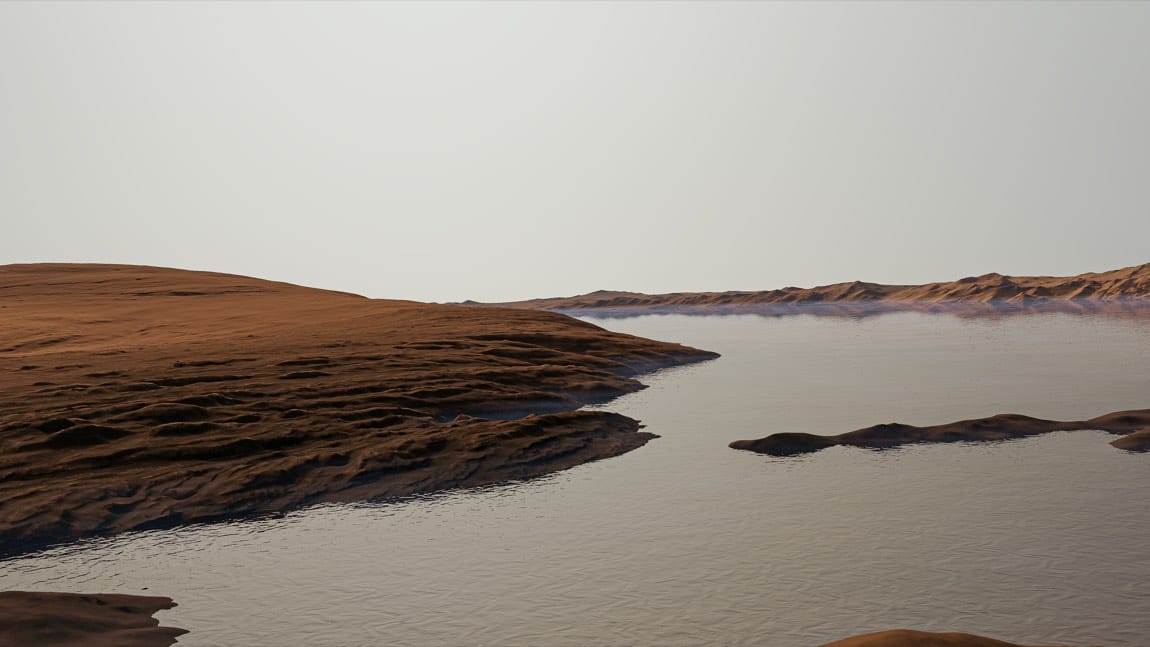
If we discover independent life on Mars or in the oceans of an icy moon — especially complex life — it would prove that life and complexity are easy, common events. That would push the Great Filter later in the sequence, toward the steps we have not yet passed. In other words, the more readily life appears elsewhere, the more likely it is that the deadly barrier lies in our future. A dead, silent universe, oddly, would be the reassuring result — it would suggest we already cleared the hardest step long ago.
It is a strange position for scientists to occupy — quietly hoping that Mars and the ocean moons turn out to be sterile. But it follows directly from the logic of the filter: the emptier the universe, the better the odds that the hard part is already behind us rather than lying in wait.
Candidate filters that may lie behind us
Several past transitions are good candidates for a filter we have already survived. The origin of life itself is the leading one — we still do not know how non-living chemistry became a self-replicating cell, and it may be astronomically unlikely. The jump from simple bacteria to complex eukaryotic cells is another; it took around two billion years on Earth and may have happened only once. The evolution of intelligence capable of technology is a third: life thrived here for billions of years without ever producing a species that builds radios.
Environmental luck may count too. A stabilizing large Moon, plate tectonics that recycles carbon and steadies the climate, and a calm enough star may all be prerequisites so uncommon that most habitable worlds never stay habitable long enough for complexity to take hold. This is where the Great Filter shades into the Rare Earth hypothesis.
If any of these is the true filter, we are among the rare survivors, and the eerie silence of the cosmos is simply the sound of how alone success really is.
Candidate filters that may lie ahead
The darker possibility is that the hardest step is still in front of us. Candidate future filters are uncomfortably familiar: nuclear war, runaway climate and ecological collapse, engineered pandemics, uncontrolled artificial intelligence, or some technology we have not yet invented that tends to destroy its makers. The theory suggests that if these risks reliably finish off young civilizations, then no one ever gets far enough to be seen.
Importantly, a future filter need not wipe out every civilization outright. It only has to be reliable enough that, across the whole galaxy and billions of years, essentially none slip through to become visibly spacefaring. A barrier that stops 999,999 of every million civilizations would still leave the sky looking empty — a sobering standard to have to beat.
This is why the Great Filter is more than an abstract puzzle. It turns questions about our own long-term survival — how we handle powerful technology — into questions about the fate of intelligence everywhere. A civilization's ability to climb the Kardashev scale of energy use may depend entirely on getting past its own filter first.
The Great Filter and the Fermi paradox
The Great Filter belongs to the family of Fermi paradox answers that say advanced civilizations are simply absent — either they never form, or they never last. It contrasts with explanations in which aliens exist but stay hidden, like the dark forest theory. Where the dark forest says "they are out there and silent," the Great Filter says "there may be almost no one out there at all."
It also overlaps with the Rare Earth hypothesis, which proposes a specific version of an early filter: that the conditions for complex life are so rare that Earth may be nearly one of a kind. Together these ideas map out the bleak end of the spectrum of answers to the great silence.
How to think about our odds
The honest answer is that we do not know where the filter lies, or even whether there is a single one. But the framework gives us something valuable: a reason to take our own long-term survival seriously. If the filter is ahead, the way past it is to build a civilization wise enough to handle its own power — to become the exception rather than another silent world. That is a challenge we have some control over, which is more than most cosmic mysteries offer.
This is why the Great Filter has become a touchstone in the study of existential risk. If the silence is a warning that technological civilizations tend to fail, then reducing those risks — nuclear, biological, environmental, and technological — is not merely prudent policy. It may be the very test the universe keeps setting and almost everyone keeps failing. Passing it would make humanity genuinely extraordinary.
Frequently asked questions about the Great Filter
What is the Great Filter in simple terms?
It is the idea that at least one step between lifeless chemistry and a galaxy-spanning civilization is so unlikely that almost nothing gets past it. That barrier could explain why we see no aliens.
Who came up with the Great Filter?
Economist Robin Hanson proposed the Great Filter in 1996 as a way to explain the Fermi paradox — the absence of any sign of alien civilizations.
Is the Great Filter behind us or ahead of us?
Nobody knows. If it is behind us, we are rare survivors with an open future. If it is ahead, civilizations reliably self-destruct before spreading, which would be ominous for humanity.
Why would finding alien life be bad news?
Because it would suggest life and complexity are common, pushing the filter toward later steps we have not yet passed — implying the deadly barrier lies in our future rather than our past.
What could the Great Filter be?
Candidates behind us include the origin of life and the rise of complex cells. Candidates ahead include nuclear war, climate collapse, engineered pandemics, or dangerous artificial intelligence.
How is the Great Filter related to the Fermi paradox?
It is one of the leading answers to the Fermi paradox, proposing that civilizations are absent because almost none survive the journey from simple life to detectable, spacefaring society.
Keep exploring the universe
This post is part of our astrobiology cluster, anchored by the Fermi paradox. Continue with the Rare Earth hypothesis, the dark forest theory, and the Kardashev scale of civilizations.
Sources and further reading: NASA: the search for life, SETI Institute, and the Great Filter (overview).