The zoo hypothesis proposes that advanced alien civilizations know we exist but deliberately avoid contact, observing humanity from a distance the way we watch animals in a nature preserve. It is an optimistic answer to the Fermi paradox: the silence is not emptiness, but a deliberate hands-off policy.
What if the reason we have never met aliens is not that they are absent, or hostile, but that they are politely leaving us alone? That is the heart of the zoo hypothesis — the idea that the galaxy may be inhabited by civilizations advanced enough to find us, yet principled enough not to interfere. This guide explains where the idea comes from, its stranger variants, and why, for all its appeal, many scientists think it cannot be the whole story.
It is one of the gentler answers to the Fermi paradox, and it sits in fascinating contrast to the darker solutions in our astrobiology series.
What is the zoo hypothesis?
The zoo hypothesis holds that extraterrestrial civilizations exist and are aware of Earth, but intentionally avoid revealing themselves. Just as visitors to a wildlife preserve observe animals without feeding or disturbing them, advanced aliens might watch us develop on our own, refraining from contact to avoid altering our natural path.
It is one possible answer to the question at the center of the Fermi paradox: if the galaxy is old and full of stars, where is everybody? The zoo hypothesis replies that they are here, or nearby, and simply choosing silence. The emptiness we perceive would then be a carefully maintained illusion — the quiet of a preserve, not a desert.
For a deeper dive, this PBS Space Time episode is a great companion:
Where the idea came from
The term was coined by the radio astronomer John A. Ball in a 1973 paper titled, simply, "The Zoo Hypothesis." Ball was wrestling with the same silence that troubled Enrico Fermi and argued that the most likely explanation for our lack of contact was that we were being deliberately left alone. If a galactic community existed and was vastly older than us, he reasoned, its members could easily have the technology and the motive to keep their distance.
Ball's framing was influential because it flipped the usual assumption. Rather than treating silence as evidence of absence, he treated it as evidence of a policy — a choice made by intelligences far beyond our own.
What would have to be true for a galactic zoo?
For the zoo hypothesis to work, several demanding conditions must all hold at once. There must be at least one civilization far older and more capable than ours — old enough to have spread through, or at least surveyed, this part of the galaxy. That civilization, or community of them, must be able to monitor young worlds like Earth without being noticed, which implies technology well beyond anything we possess. And crucially, they must share a stable, long-lasting agreement to stay hidden.
None of these is impossible. A civilization even a million years ahead of us — a cosmic eyeblink — could plausibly manage all three. But each added requirement makes the scenario more specific, and the more specific a theory becomes, the more ways it has to be wrong.
The requirement that troubles scientists most is the last one. A single galaxy could host thousands of independent civilizations over its history, each with its own values, politics, and dissenters. Expecting all of them to honor the same quarantine, forever, is a tall order — and it is the crack through which most objections to the zoo hypothesis pour.
Why advanced aliens might leave us alone
Several motives could lead a civilization to adopt a hands-off stance toward a young world like ours.
- Ethics and non-interference. A mature civilization might hold that emerging species have a right to develop without outside meddling, much as conservationists try not to disturb wildlife.
- Scientific value. An untouched civilization is a natural experiment. Making contact would contaminate the very thing worth studying.
- Waiting for a threshold. They may plan to reveal themselves only once we reach some milestone — a certain technology, wisdom, or unity — and judge that we are not ready yet.
- Protecting us, or themselves. Early contact could destabilize a young society, or expose the observers to unknown risks.
In each case, the silence is not indifference. It is restraint, applied by minds that have decided contact would do more harm than good.
There is a certain logic to it that mirrors our own changing values. Over the last century, human attitudes toward wildlife and toward isolated peoples have shifted decisively toward non-interference — we now build preserves and pass laws precisely to avoid disturbing what we study. If that trajectory continues as a civilization matures, a very old society might regard leaving Earth alone not as neglect but as the obviously ethical choice.
How and when might the silence end?
A natural follow-up is: what would make the observers finally step forward? Most versions of the zoo hypothesis assume there is a trigger — a threshold we must cross before contact is allowed. It might be technological, such as building a faster-than-light drive or establishing a permanent presence beyond our home planet. It might be social, such as achieving global peace or unity. Or it might be the moment we independently detect them, at which point the pretense of an empty sky no longer serves any purpose.
In this reading, our own expansion into space is not just exploration — it could be the audition that finally ends the quarantine.
Variants: the laboratory, planetarium, and interdict hypotheses
Over the years the basic idea has spawned several intriguing relatives.
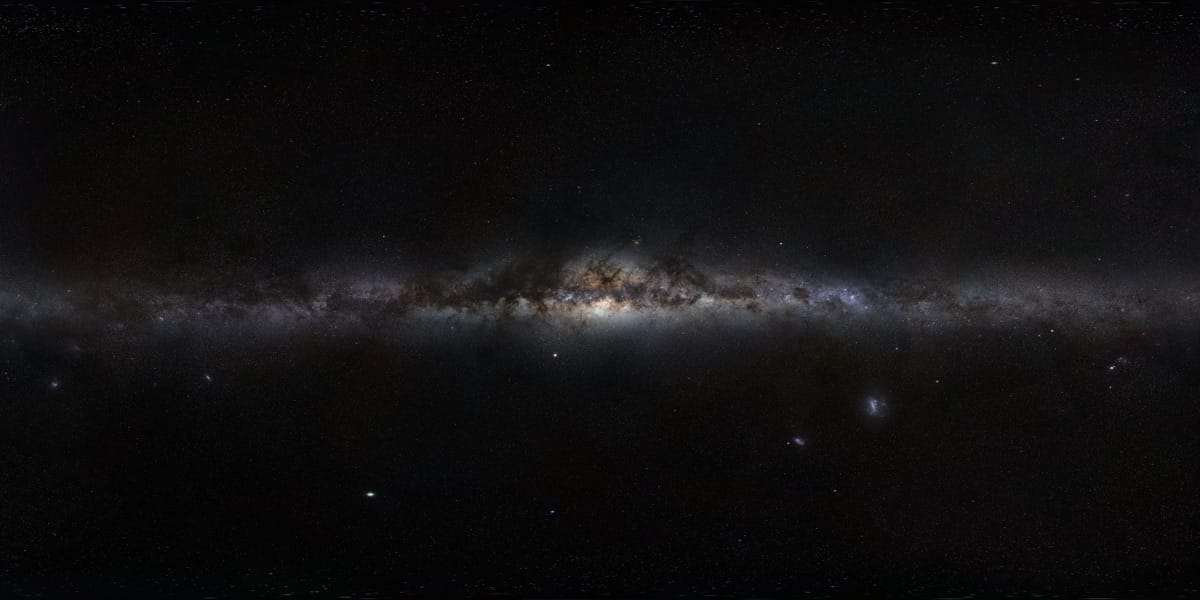
The laboratory hypothesis, also from John Ball, casts Earth not as a preserve but as an experiment — a controlled setting whose results advanced observers are monitoring. The interdict hypothesis, proposed by Martyn Fogg in 1987, imagines a formal galactic agreement to quarantine developing worlds until they mature. And the eerie planetarium hypothesis, suggested by science-fiction author Stephen Baxter in 2001, goes furthest: perhaps the sky we see is a convincing simulation, maintained by a civilization powerful enough to hide the true, busy universe from us entirely.
The planetarium idea is the most extreme because it demands the most power: maintaining a convincing fake sky for an entire planet would require energy on the scale of a very advanced civilization, high on the Kardashev ladder. Most researchers treat it as a thought experiment rather than a serious proposal. Still, it captures something important — the better an advanced civilization is at hiding, the less our silence can tell us, because a sufficiently capable observer could erase every trace of itself.
The Prime Directive: the zoo hypothesis in fiction
The concept has a famous fictional cousin. In Star Trek, the Prime Directive forbids advanced civilizations from interfering with the natural development of less advanced ones — a storytelling version of exactly the ethic the zoo hypothesis proposes. The idea resonates because it feels plausible: as our own thinking about conservation and research ethics has matured, non-interference has come to seem like something a wise civilization might genuinely choose.
Fiction is not evidence, of course. But the fact that storytellers keep arriving at the same principle hints at how intuitive the idea feels once you take advanced, ethical aliens seriously — and how naturally restraint, rather than conquest, reads as the mark of a truly mature civilization.
Does the zoo hypothesis hold up?
For all its charm, the zoo hypothesis has a serious weakness, often called the uniformity problem. For the silence to hold, every single alien civilization — across the entire galaxy and its billions of years — would have to agree to the same hands-off policy and never break it. It only takes one civilization, or one individual, or one accident, to shatter the quarantine and reveal the game.
Given how much variety we might expect among countless independent civilizations, a perfectly maintained silence seems unlikely. There is also the problem that the hypothesis is very hard to test: a zoo designed well enough would, by definition, leave no evidence. Ideas that can never be disproven make many scientists uneasy, however appealing they sound.
There is a second practical objection. We have been broadcasting radio and television into space for roughly a century, and our probes are drifting outward; a nearby observer would surely have noticed us already. A true zoo would presumably permit that leakage without responding — which starts to feel less like a deliberate preserve and more like a definition stretched to fit the silence. Skeptics also note that even passive observers usually leave equipment behind, such as monitoring probes or relays, and we have found none.
It is worth being clear about one thing the zoo hypothesis is not. It is sometimes invoked to explain reports of UFOs or unidentified aerial phenomena, but mainstream science treats those reports as a separate matter with ordinary explanations, and the zoo hypothesis does not rest on them. The theory stands or falls on the broad silence of the cosmos, not on any specific sighting.
The zoo hypothesis and the Fermi paradox
The zoo hypothesis belongs to the family of Fermi paradox answers in which aliens exist but stay hidden. In that sense it is a close cousin of the dark forest theory — but with the opposite emotional charge. Where the dark forest imagines civilizations hiding out of fear and hostility, the zoo hypothesis imagines them hiding out of care and restraint. Same silence, very different reasons.
Both stand in contrast to answers like the Great Filter, which argues that the silence exists because advanced civilizations are simply absent — that almost none survive long enough to watch anyone. Whether the galaxy is a preserve, a battlefield, or a graveyard remains one of the great open questions, and how far any civilization can rise on the Kardashev scale shapes which answer feels most likely.
What makes the zoo hypothesis endure is that it is the rare answer offering something like hope. It suggests we are not alone, not doomed, and not marked for destruction — merely young, and perhaps being given room to grow. Whether that is genuine wisdom or comforting wishful thinking is something only contact, if it ever comes, could finally settle.
Frequently asked questions about the zoo hypothesis
What is the zoo hypothesis in simple terms?
It is the idea that advanced aliens know about Earth but deliberately avoid contact, observing us from a distance the way people watch animals in a preserve, so that we develop naturally.
Who proposed the zoo hypothesis?
The radio astronomer John A. Ball introduced the term in a 1973 paper as a possible explanation for why we have never detected extraterrestrial civilizations.
Why would aliens deliberately avoid contact?
Possible reasons include a non-interference ethic, the scientific value of an untouched civilization, waiting until we reach some milestone, or protecting either us or themselves from the risks of early contact.
What is the main problem with the zoo hypothesis?
The uniformity problem: for the silence to hold, every alien civilization across the galaxy and all of time would have to follow the same hands-off policy without exception. It only takes one to break it.
How is the zoo hypothesis different from the dark forest theory?
Both say aliens exist but stay hidden. The zoo hypothesis assumes benevolent restraint, while the dark forest theory assumes fear and self-preservation drive the silence.
Is the zoo hypothesis science or science fiction?
It is a serious hypothesis discussed by scientists, but it is very hard to test — a well-designed "zoo" would leave no evidence — so it remains speculative rather than proven.
Keep exploring the universe
This post is part of our astrobiology cluster, anchored by the Fermi paradox. Continue with the dark forest theory, the Great Filter, and the Kardashev scale of civilizations.
Sources and further reading: SETI Institute, NASA: the search for life, and the zoo hypothesis (overview).